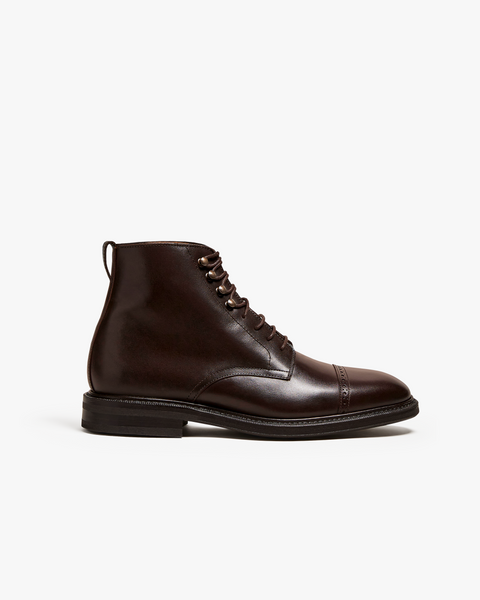
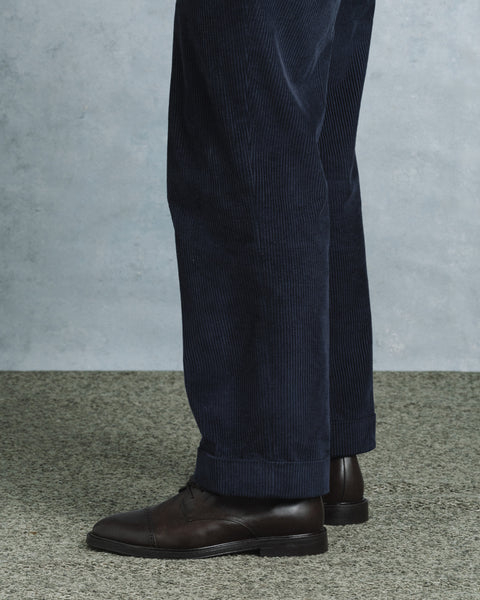
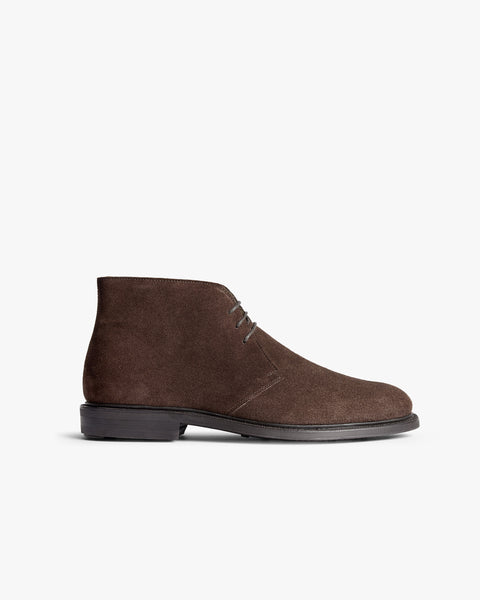
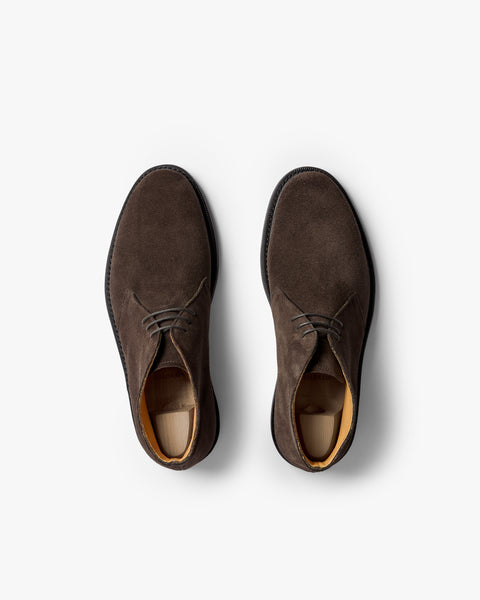
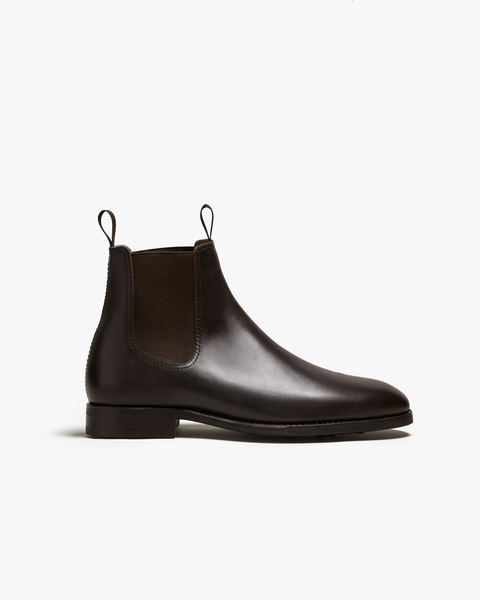
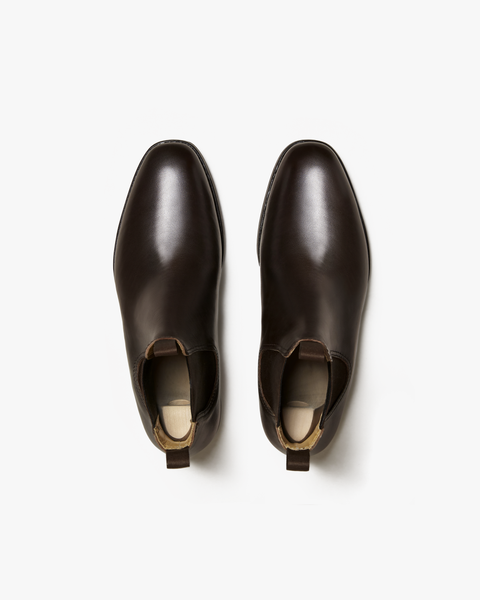


The difference is on the side of the boot: a chelsea has no laces, just an elastic gore at each side that lets you pull it on, while a chukka laces through two or three pairs of eyelets over a low shaft, and a desert boot is simply a chukka in suede on a crepe sole. That one detail sets how dressy each can go: a sleek smooth-leather chelsea works under a suit, and every chukka, desert boot included, stops at smart-casual. Buy the chelsea first if you want one boot that also does formal; buy the chukka if your week runs mostly casual, or you already own a chelsea.
A chelsea and a chukka look like close relatives. Both sit at the ankle, both come in the same leathers and suedes, and from the front they're easy to confuse. From the side they're nothing alike: one has nothing to fasten, the other laces up. That single detail is the reason one of them can go under a suit and the other can't.
A third name usually gets pulled into the argument. The desert boot isn't a rival to the chukka but a version of it, which is where much of the confusion starts.
Chelsea, chukka, desert boot
A chelsea has no lacing at all. In place of laces, an elastic panel called a gore sits in each side of the shaft, with a tab at the heel to pull the boot on. With nothing to fasten, the upper runs in one clean line from toe to collar, and that unbroken surface is why a chelsea looks a shade dressier. A chukka laces through two or three pairs of eyelets over a low shaft; the lacing breaks the surface up, and the boot looks more casual for it. No other part of the construction separates them.
The desert boot only confuses things because the name gets used loosely. It isn't a third category. It's a chukka with a suede upper and a crepe rubber sole, usually unlined — the shape Clarks made famous after Nathan Clark drew the original in 1949, working from the suede boots he'd seen made in Cairo's bazaars for officers of the British Eighth Army. So every desert boot is a chukka, but not every chukka is a desert boot. The wider chukka family also comes in leather, on firmer rubber or Dainite soles, with a lining and a little more structure at the ankle, and those versions sit a step smarter than the suede-and-crepe original. The name, in case you're wondering, comes from polo: a chukka is a period of play.
How dressy they get
Material sets most of the ranking. Between the two boots and their two materials you get four combinations. A smooth-leather chelsea in black or dark brown is the smartest of the four. A leather chukka on a firmer sole passes for smart-casual. Suede makes either boot more casual: a suede chelsea is a casual shoe, and a suede chukka, desert boot included, is the most casual of the lot. The details that make a boot smarter are the same across all four: smooth leather, a slim almond or pointed toe, a slim sole. Suede, a round toe and a chunky or crepe sole all work the other way. And there's a hard ceiling: even the sharpest chukka isn't smart enough for a tie, and neither boot works at black tie or with a tuxedo, where the answer is a polished or patent oxford.
Meet all three and a chelsea goes under a suit; black reads most formal, dark brown a touch softer. The trousers matter as much as the boot: keep them slim or tapered, hemmed to break cleanly at the ankle rather than pool over the shaft. Get that right and a leather chelsea is fine at the office, at dinner and at most weddings, which is everything short of black tie.
Chelsea first, or chukka
Shop chelsea bootsWhich one to buy first is an open question, and both choices make sense. Our advice follows from the ranking above. Buy the chelsea first, in smooth dark leather, if you need one boot that can also go formal; it's the only one of the pair that reaches from jeans to a suit. Buy the suede chukka first if your week is mostly casual, or if you already own a chelsea.
The chelsea's case is range: one pair in dark leather covers jeans on a rough day and a suit on a smart one, and no chukka can do both. The chukka's case is just as practical: if nothing in your week calls for a suit, the chelsea's extra range is wasted, and the chukka does everything you'd actually use a boot for. So decide on what you own and where you go, not on a rule. A few office days and the odd wedding point to the chelsea; a life in chinos and knitwear points to the chukka.
Once you've decided, the rest is detail: what to wear the boot with, how it should fit, and what suede needs after a wet week. Our guide to wearing chelsea boots takes the chelsea through all of it, and where suede is involved, cleaning suede shoes covers the upkeep.
One of each
View all


