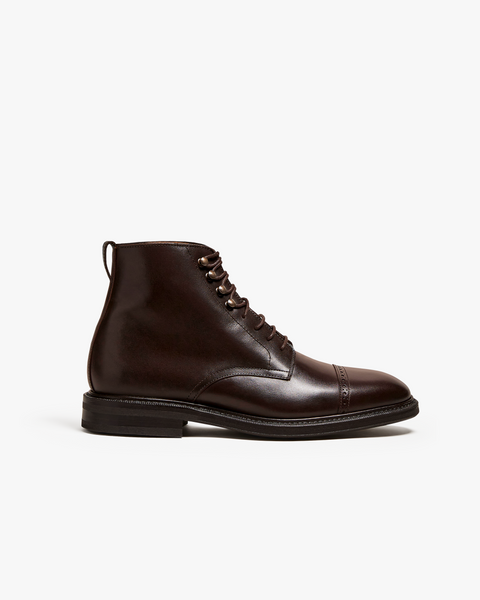
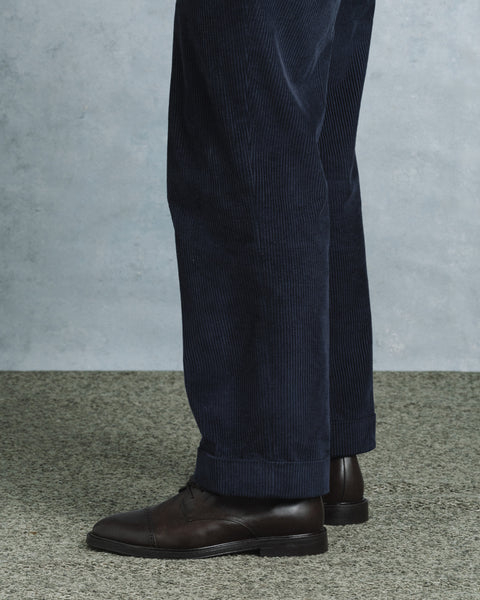
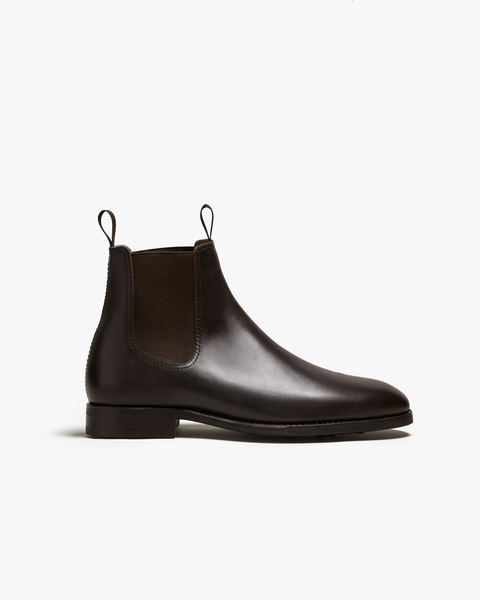
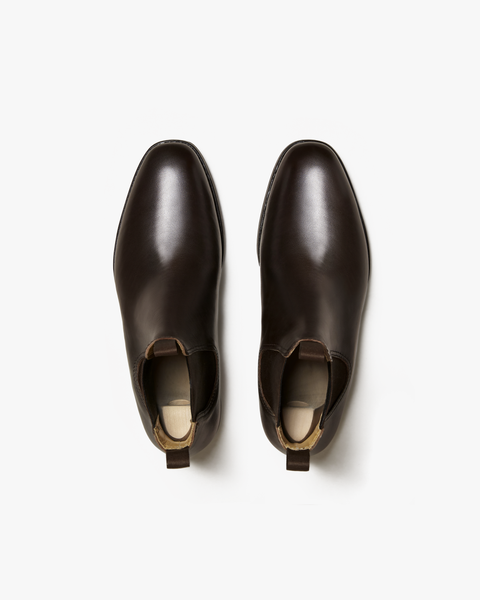


Match the shoe to the suit and keep it darker than the cloth. Navy takes dark brown or black; grey takes brown, or black once it darkens to charcoal; a black suit takes black and nothing else; brown and linen take a deeper brown. The more formal the occasion, the darker and plainer the shoe.
The suit is on, the tie is tied, and two pairs sit by the door — black oxfords and brown loafers. Most mornings like this you already own the right shoe; the doubt is which pair goes with which suit, and how formal the day is about to be.
Both have short answers. The belt always matches the shoes — we've covered that pairing on its own — and the shoe itself follows from the suit, so the suit is where we'll start.
Start with the suit, not the shoe
Dress shoes carry a rank order, and it does a lot of the work here. The oxford is the most formal shoe you can lace up, the derby sits a step below it, the monk strap alongside, and the loafer a step below that — if the family names blur together, our guide to the types of dress shoes sorts them out properly. For matching you only need the order: a boardroom, an interview or a funeral calls for the top of the ladder in dark, polished calf, while a derby or a monk in dark calf handles ordinary business dress just as well, and a summer party is where you can climb down further still.
Colour works the same way: darker is more formal, lighter more relaxed, and in every combination that works, the shoe stays darker than the cloth — never the exact same shade. Texture is the third scale: polished calf first, grained leather a step softer, suede the most casual of the three.
If you'd rather think in occasions: interviews and funerals take a black oxford; the office takes black or dark brown lace-ups; a wedding guest gets more room, especially in summer; and after hours the softer, lighter options come in.
Most wardrobes begin with navy. Brown is the default: dark brown for the office and anything serious, cognac and tan for daytime and summer. Burgundy sits between the browns and black, and it wears well against navy too. When the day turns formal — an interview, a funeral, an evening event — switch to a plain black oxford and stop thinking about it.
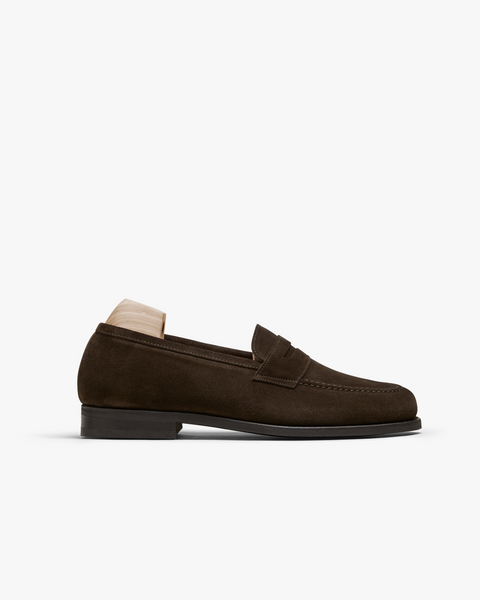
Lighter and brighter blues follow the same verdicts. The cloth is lighter, so the browns keep even more of their contrast — tan and cognac in particular — while black starts to look heavy against anything much paler than true navy. If the shoe is a loafer, the colours don't change; dark brown suede is the most useful single answer, and we come back to the loafer question further down.
The grey suit
With grey, it depends where between near-white and charcoal the suit sits. Light and mid grey take brown best — dark brown or tan — and burgundy sits especially well against grey cloth. Charcoal is the exception: it's dark enough that most browns lose their contrast against it, so it takes black first and the darkest brown you own second. If one suit has to carry both interviews and weddings, make it mid grey: dark brown shoes for the wedding, the black oxford for the interview.
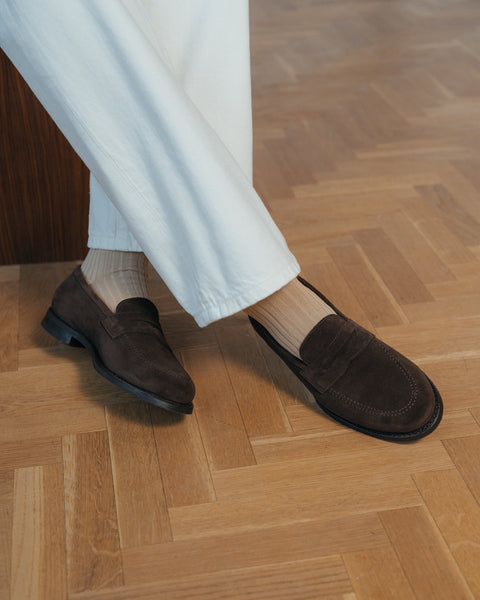
Texture is worth a word here too. Grey wears suede well — a dark brown suede derby or loafer under a mid-grey suit is an easy answer for weddings and warm weather, and it keeps the outfit from looking like office dress on a Saturday.
The black suit
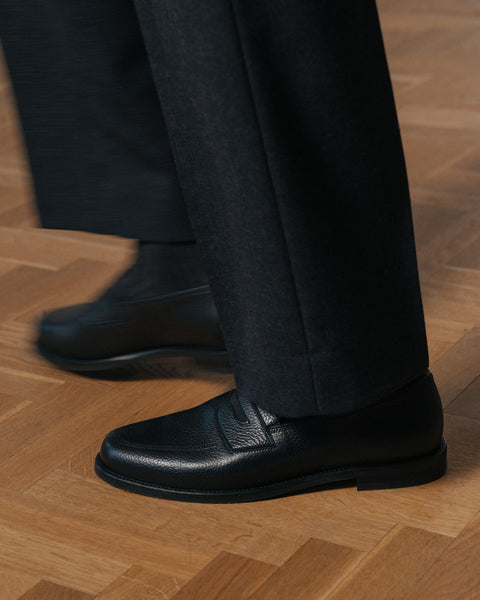
The black suit has the shortest answer in the guide: black shoes. Black tailoring is ceremony wear — evenings, funerals, the strictest of offices — and the shoe has to match that seriousness: plain black calf, laced, properly polished. A black derby or monk passes on an ordinary dark-suit day; once the event turns ceremonial, closed lacing is the safer call.
Then there's the question everyone wants a yes to: brown shoes with a black suit. Our honest answer is no. Nothing forbids it, but the pairing flatters neither half — brown leather loses its warmth against black cloth, and the combination looks accidental rather than decided. Save brown for navy, grey and brown itself.
Brown, tan and linen
A brown or tan suit swaps the roles, and black becomes the colour to avoid — it flattens a brown suit just as it flattens a brown shoe. Wear brown on brown instead, one shade darker than the suit: mid-brown cloth over dark brown shoes, a tan suit over mid brown or darker. The trap is matching the shade exactly, which is why the rule says darker, never identical.
Linen and the other summer cloths follow the same line and forgive far more. The suit is already a level less formal, so the shoes can be too: lighter browns, suede, unlined shapes. The paler the cloth, the more the shoe can relax — a stone or cream linen suit sits naturally over mid brown, taupe or tan, with suede ahead of polished calf. Which is where the loafer finally gets its turn.
Where the loafer belongs
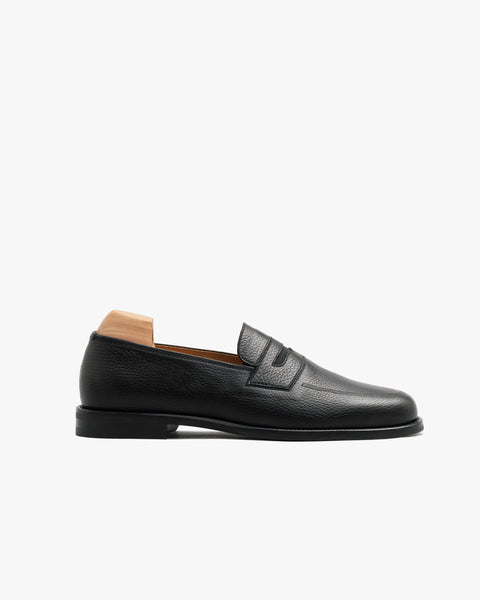
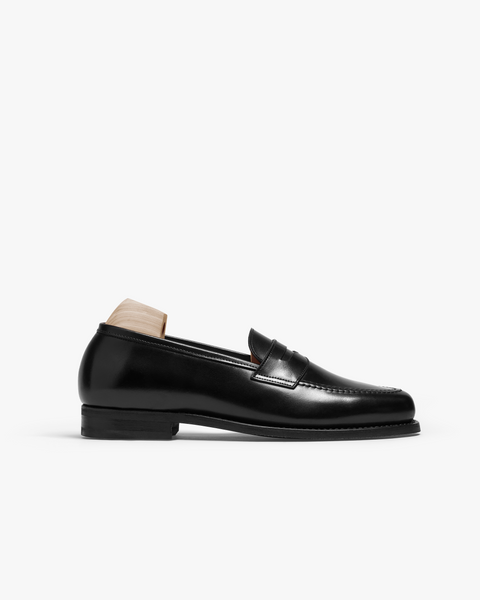
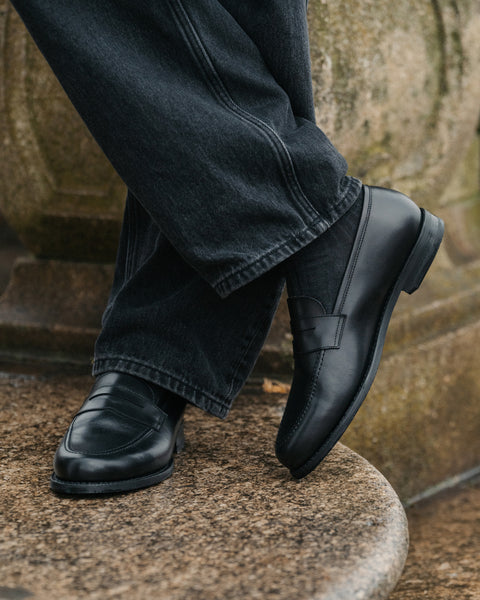
With the right suit, we'd argue a loafer isn't just allowed; it's the better-looking choice. The right suit is soft tailoring — unstructured shoulders, summer cloths, linen — rather than your most formal business kit. A dark brown suede penny loafer under a soft navy suit is the easiest combination in this whole guide, and in polished calf a penny loafer is fine for most offices. Penny and tassel shapes are the natural suit loafers; keep drivers and the most casual shapes for jeans and chinos. Everything we make in the shape is in our loafer range.
A loafer still doesn't go to the most formal rooms — interviews, funerals and strict business dress call for laces. Socks are their own subject — full-length or deliberately none, never the in-between — and we've settled it in how to wear loafers and the sockless question.
If you're starting from scratch
Work down the ladder as you buy: the black oxford covers the top rungs, a dark brown derby the broad middle, and the loafer everything soft tailoring allows. Those three are the pairs below.
The three we'd start with
View all


Black tie is a different rulebook
All of this stops at the invitation that says black tie. A dinner suit follows its own, stricter code — a plain black oxford in patent or mirror-shined calf, and very little else — and we've covered it properly, including the patent oxfords we make for exactly that evening, in our black-tie guide.
Common questions
Can you wear brown shoes with a black suit?
No — a black suit takes black shoes. Brown against black looks mismatched rather than deliberate, and the warmth that makes brown leather attractive disappears against black cloth. Keep brown for navy, grey and brown suits.
Can you wear loafers with a suit?
Yes, with the right suit. A polished calf or suede loafer sits well with soft, unstructured and summer tailoring; for interviews, funerals and the strictest business dress, wear a laced shoe instead.
What is the three-shoe rule?
The phrase gets used loosely, and there's no official version. The idea behind it is a sensible buying order: a black oxford, a dark brown derby and a versatile third pair — a loafer or a suede derby — will cover almost every suit and occasion you own. Treat it as guidance, not a rule.
What shoes should you never wear with a suit?
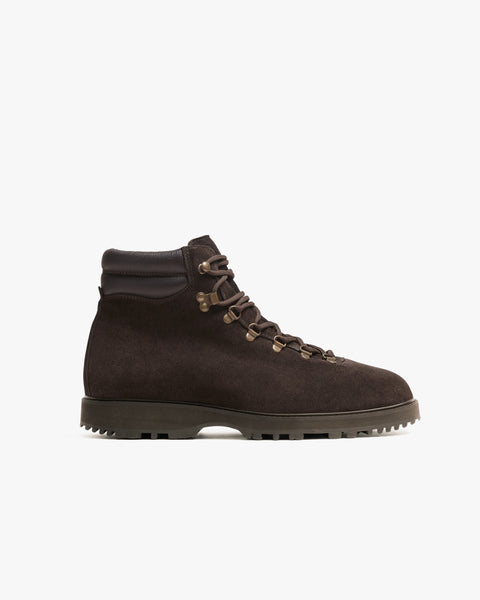
Trainers, anything on a heavy rubber sole, and — at a formal event — any shoe lighter than the suit. Past those three, most pairings are a question of taste rather than error.


