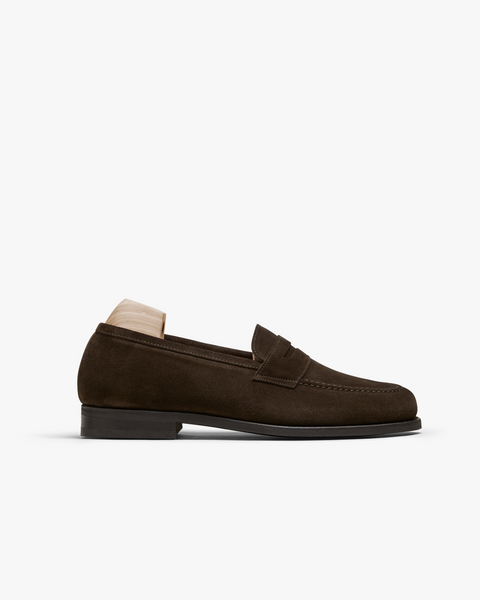


To clean nubuck shoes, let mud dry hard before you touch it, then brush it out with a soft nubuck brush, following the direction of the nap. Lift scuffs with a suede eraser, and save a dedicated cleaner for marks that won't shift — worked across the whole panel, never one spot. Give the shoes a day to dry away from heat, brush the nap upright again, then seal it with a neutral protector spray so water beads instead of soaking in. Nubuck is the outer grain of the hide sanded to a fine nap, which makes it tougher and more water-resistant than suede, and a good undyed spray won't noticeably darken even a pale stone or tan pair.
Nubuck is the outer grain of the hide, sanded to a fine, close nap — suede's harder-wearing, more water-resistant sibling. The pale versions, the stones and tans, are the ones people worry about, because every mark shows on them. That worry is mostly misplaced: most of what a nubuck shoe needs is a soft brush and a little patience.
The nap you see is the finish itself — there's no polish laid over a nubuck shoe — so caring for a pair really comes down to keeping that nap in good order. It's worth starting with what the nap actually is.
What the nap actually is
Put a nubuck shoe next to a suede one and run your thumb across each. The nubuck feels tight and dense, close to felt; the suede is longer and softer under your finger. Both are leather sanded into a nap, and the difference is which side of the hide got sanded. Nubuck is the outer grain, the strong side, sanded just enough to raise a fine velvet. Suede is the soft underside, usually a split, buffed to a longer and looser pile. Because nubuck keeps that outer grain, it wears harder and sheds water better than suede, though neither is anywhere near waterproof untreated.
Care begins with that nap. A nubuck shoe carries no coat of cream or wax over the leather; the fibres you're looking at are the finish, and everything in this guide comes down to keeping them standing. Dirt gets brushed out rather than rubbed in, dry methods come before wet ones, and nothing goes on the shoe that would flatten the surface. The routine is the same dry-first one our suede care guide teaches, with a lighter hand for nubuck's closer, finer nap.
The essentials
Shop nubuck & suede careMost of it is one brush. A soft nubuck brush lifts the day's dust and stands the nap upright again, and it does the bulk of the work in this guide before any cleaner comes near the shoe. Three things fill in around it: a suede eraser for scuffs and dry marks, a nubuck cleaner or suede shampoo held back for heavy soiling, and a neutral protector spray to stop water and stains settling in. Go easy on conditioner — nubuck needs very little of it.
You'll find all of it in our nubuck and suede care collection, and if you'd rather buy everything at once, our suede and nubuck care kit pairs a water-repellent spray, a brightening spray and a crepe brush.
Shop nubuck & suede care
View all

The routine
The routine runs dry to wet: brush first, eraser next, cleaner only for what the first two can't shift. Nearly every nubuck disaster starts with a hasty damp cloth, so give the job half an hour and work panel by panel rather than picking at a single mark.
Let mud dry, then brush it off
Wet mud pushes straight into the nap, so leave it alone until it dries hard. Then brush it out with a soft nubuck brush, always following the direction of the nap — that lifts the dirt clear and settles the texture back down.
Lift scuffs with an eraser
A suede eraser takes a scuff off rather than hiding it, wearing the mark out of the nap instead of masking it. Rub it over scuffs and dry marks, wet the tip a little for anything stubborn, then brush the crumbs away.
Draw out grease with cornstarch
Grease needs drawing out, not scrubbing. Cover an oil or grease mark in cornstarch or talcum powder, leave it several hours or overnight to pull the oil up, then brush the powder away.
Deep-clean the whole panel
When soiling has gone beyond a brush, work a nubuck cleaner or diluted suede shampoo across the entire panel rather than the stain alone — clean the whole face and the colour stays even, with no tide-line where wet meets dry. Don't soak the shoe, and never put it through the machine.
Dry for 24 hours
Pack the shoes with paper or a shoe tree to hold their shape, and let them dry for a full 24 hours, well away from radiators and direct sun.
Re-nap and re-protect
Once they're properly dry, brush the nap upright again and finish with a neutral protector, laid on in light, even coats to keep water and stains at bay.
Watch: how to care for nubuck
The one rule everyone agrees on
Cream and wax polish are made for smooth leather. On nubuck they glaze the nap flat for good, and no amount of brushing brings it back — ask anyone who's tried. The rest of the list is short: household soap, harsh solvents, a soak in the sink, a cycle in the washing machine. Nubuck stands up to a lot, but not to any of those.
Brushes get argued about more. A soft one is almost impossible to misuse: nylon, boar bristle, horsehair, or a crepe rubber brush to finish. A stiff brass-bristle brush clears a matted nap faster, but the usual warning is that it bites too deep into a fine, dense surface and pulls at the fibres. If you use one, keep your hand light.
To spray, or not
With polish ruled out, a protector spray is the only protection a nap can take, and whether to bother with one is the question owners split on hardest. A well-made pair will cope with some weather untreated, which is why a few owners leave theirs bare; most treat them regardless, pale colours above all, and we'd do the same. Neither nubuck nor suede is waterproof by nature, and a protector makes a visible difference in the rain: water beads and rolls off instead of sinking in and drying to a mark. Treat the shoes before their first wet outing, and top the coating up now and then — it wears thin after a handful of soakings.
Whichever spray you choose, make it the neutral, undyed version. Our own waterproofing spray is built that way — an invisible barrier against water, snow and dirt that doesn't change the nap's texture or stop the leather breathing.
Keeping light colours light
The worry with a pale pair is that the spray itself will darken it. Test on a spot no one sees (the inside of the heel is ideal), and expect good news: a neutral, undyed spray is made not to shift colour or texture, and on most nubuck and suede it won't darken the leather at all. The very palest stones and off-whites can deepen a shade, though never as much as plain water would, and even then the darkening comes from saturation rather than the spray. Flood the leather and it dries patchy; build the coat in light, even passes and the colour holds. Spray outdoors or by an open window, hold the can well back, and let each coat dry before the next.
Road salt and rain
Road salt does more winter damage than rain or snow. It dries into a hard white bloom, and the longer it sits the harder it gets to shift. Brush the dry salt off as soon as you see it, then lift what's left with a one-to-one mix of white vinegar and water on a tightly wrung cloth; the mild acid neutralises the alkaline salt. Let the shoe dry away from heat before you brush the nap back up.
A water tide-line takes the same whole-panel logic as a deep clean: don't work on the mark itself. Wet the whole panel down until the ring is no longer an edge between wet and dry, press the surface water out with a cloth, and let it dry slowly, well away from heat. Brush the nap back up only once it's bone dry — by then the panel has dried to a single shade and the line has gone with it.
Bringing it back
A flat, matted nap isn't ruined. It comes back up under the brush — dampen the surface a little first if the matting has really set, then brush as it dries. If the colour has faded rather than the texture, a conditioning spray made for suede and nubuck brings the tone back; use it sparingly. For pale bucks, a chalk 'buck bag' or a white suede block lifts surface marks and freshens the face. When a pair is past a home clean altogether, a good cobbler can re-clean and re-dye it. And if the shoe in question is smooth leather rather than nubuck, that's a different routine; our leather care guide covers cream, wax and polish.
A few more
Is nubuck real leather?
Yes, entirely. Nubuck is the outer grain of the hide, sanded to a fine velvety nap; that soft, matte face is the only thing setting it apart from a smooth leather.
What is roughout?
Roughout is full-grain leather turned the other way round — worn flesh-side out, so the fuzzy face is on show and the strong grain layer sits hidden underneath. That inversion makes it the toughest and most weather-resistant of the napped leathers: the surface you look at is also the hard-wearing one.
Is silicone bad for nubuck or suede?
There's plenty of back-and-forth about whether the silicone in a protector spray dries leather out, but no solid evidence that it does any real harm, or that one modern spray beats another on that count. A reputable neutral protector is the safe choice. These cans rarely list their full ingredients anyway, so choose a breathable formula from a maker with a good name rather than trying to judge it from the label.
Do you need to treat brand-new nubuck shoes?
Not necessarily. Plenty of good nubuck and suede shoes leave the factory already treated and ready to wear, and some makers would rather you didn't spray a fresh pair at all. Save the protector for after a deep clean, after a shampoo, or once the original finish has worn thin with use. If you'd feel better sealing them before their first wet season, a neutral spray in light, even coats is cheap insurance and won't hurt anything.


