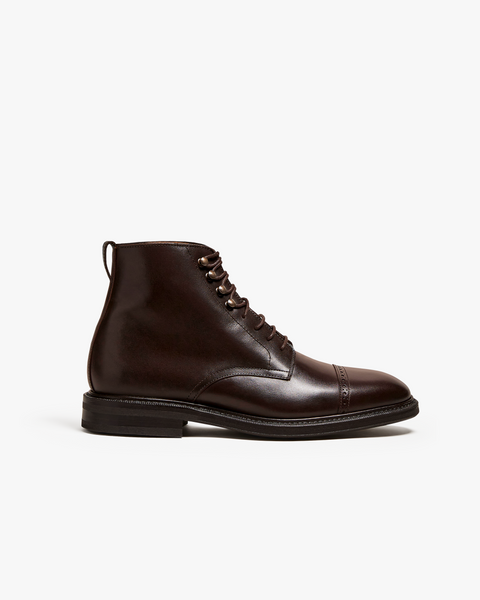
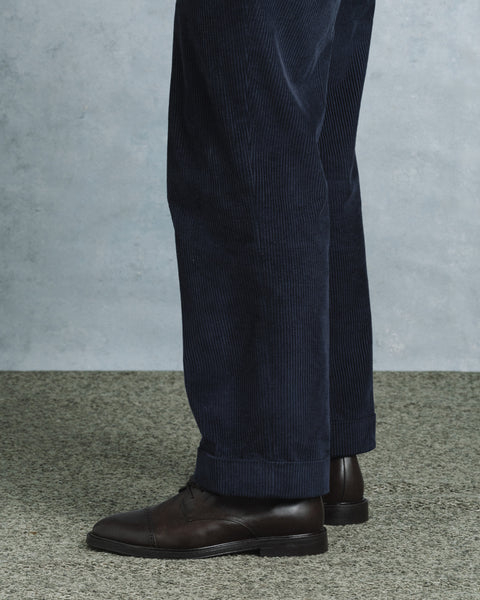
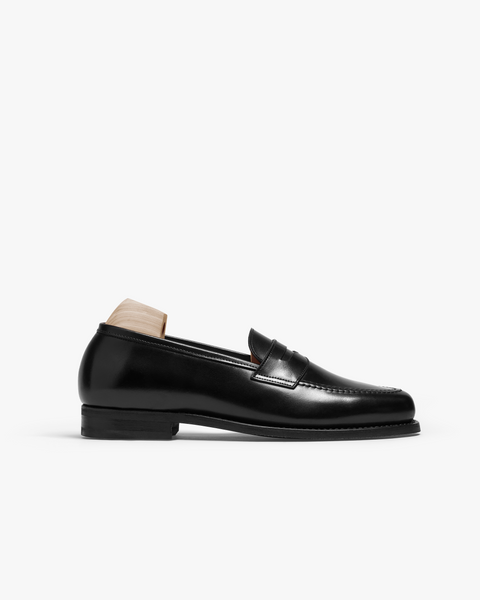
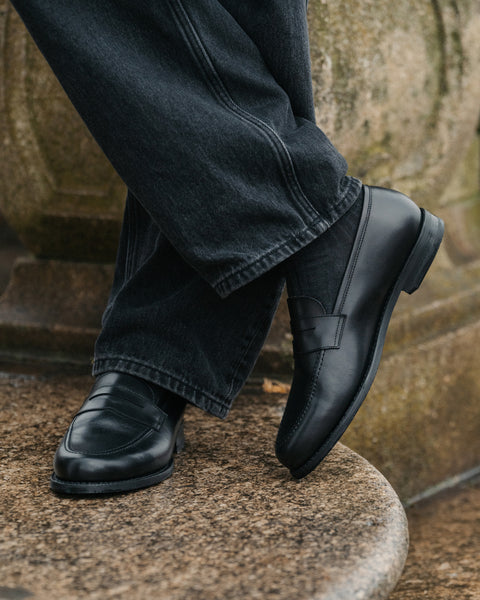
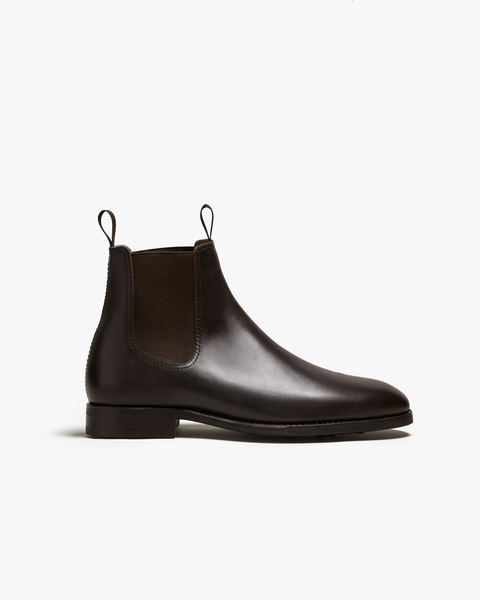
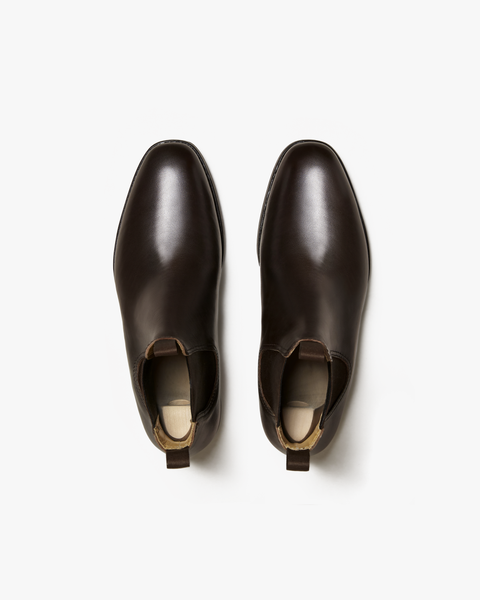
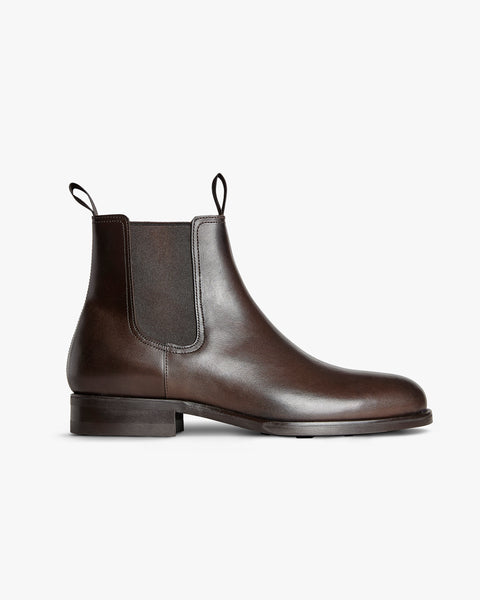
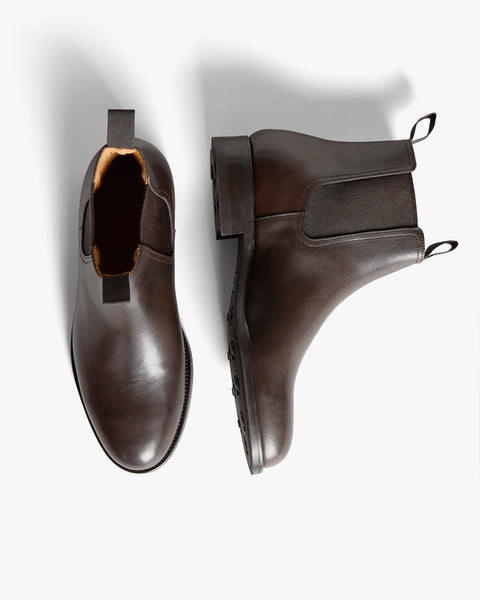


Clean suede dry first, and reach for water only when you have to. Let the shoes dry fully, brush off the loose dirt with a suede brush, then lift scuffs with a suede eraser; that clears most of it. When dirt has gone deep, wash the whole panel with a diluted suede shampoo rather than dabbing one spot, so it dries a single even shade — then dry away from heat, brush the nap back up, and finish with a protector spray.
Suede has a reputation for being difficult, and if you own a pair you probably know where it comes from: a pale ring round the toes after a wet walk, a dark patch where something spilled, a scuff that won't brush away. The marks look permanent. Almost none of them are, and getting them out doesn't take a drawer full of products.
Nearly everything that goes wrong with suede is either dirt sitting in the nap or a panel that's dried unevenly, and the fix depends on which of the two you're looking at. There's a short film from our workshop further down that shows the method rather than describing it.
What actually goes wrong
Ask around and you'll get opposite warnings. The sneaker crowd says never let water near suede: once it's wet, the fibres are finished and the nap dries flat and glassy. The boot crowd says clean suede is far tougher than it looks, and will bead light rain and roll it straight off. Both are half right, because they're describing different problems.
Dirt is the first problem. Suede's nap is soft and open, closer to a pile of fibres than a sealed surface, and everyday dirt sits in that pile — which is why most of it lifts straight out with a brush and an eraser, no water involved. Dirt that's worked in deeper needs a wash, and a wash done properly, across the whole shoe, is nothing to be afraid of. Water is the second problem, and it only does damage when it's partial: a splash that soaks one patch and, as it dries, leaves a ring marking how far the water got. That ring is the tide line, and it isn't ruined leather, just uneven drying.
So suede care has two rules. Clean it dry first. And when water is involved, whether a wash or a tide line or a full soaking, treat the whole panel so it all dries to one shade.
The kit
Shop suede careMost of the work is dry work, done with a brush and an eraser. A suede brush pulls dirt out of the nap and buffs away light marks; you'll use it far more than anything else here. A suede eraser, sometimes sold as a gum block, lifts the scuffs and dry stains the brush leaves behind. Between them they handle most of what everyday wear puts on a shoe. A suede shampoo is worth keeping on the shelf for the occasional deep clean — we don't make one, and any of the usual care brands' versions will do.
Our own suede care kit is the starting point: a crepe-rubber brush that lifts the nap and works out light marks, a colour-restoring spray and a waterproofing spray. Add a cheap rubber eraser block for scuffs, and a stiffer brass brush for shifting dust. Use the brass one with care: on dense, fine suede, stiff all-brass bristles can tug hairs loose and leave the surface looking worn. If light pressure seems to be taking the nap with it, switch to a softer brass-and-nylon, boar-bristle or horsehair brush. Whatever the brush, technique matters more than the tool: brush gently, in one direction. You're combing the nap, not scrubbing it.
The suede care we make
View all


The method
The routine runs one way: dry first, water only if you must, protector last. Take the steps in order — most pairs never need more than the first three.
Let them dry fully
Wet or muddy? Stand the shoes at room temperature until they're bone dry, well away from radiators and direct sun. Suede cleans far better dry than damp.
Brush off loose dirt
Run a suede brush back and forth to lift the surface dust, then finish with light strokes in one direction to settle the nap.
Lift scuffs with an eraser
Work a suede eraser over scuffs and dry marks with light, firm strokes, wetting it slightly for the stubborn ones, then brush the crumbs away.
Deep-clean only if needed
Only if a brush won't shift the dirt: work a suede shampoo into a lather across the whole shoe, never one spot. You need far less than the tutorials show — a tablespoon diluted with water raises plenty of lather.
Blot, don't soak
Wipe off the excess foam and blot the suede with a clean towel. Never soak it, and never hold it under a running tap.
Dry away from heat
Pack the shoes with paper or slip in cedar trees, and leave them to dry right through, away from any heat — usually a day or more.
Raise the nap and protect
Once they're dry, brush the nap back up, then lay down an even mist of protector spray.
Clean the whole panel, never the single mark. Suede lightens a touch wherever it's worked, so treating one spot leaves you with a patch; take in the entire toe, quarter or vamp and the colour stays even.
Watch: how to care for suede
After the rain
A tide line comes out the way it went in: with water, applied evenly this time. Re-wet the entire panel until no border is left, let the shoe dry right through away from heat, then brush the nap back up. The full logic — and the patient routine that saves a properly soaked pair — is in the waterproofing guide. For discolouration that won't shift either way, a pigmented renovator like Saphir Renovateur can recolour the leather and cover the mark.
Stains and scuffs
Oil and grease are the one stain you treat dry. Cover a fresh mark with an absorbent powder (cornflour, baby powder and baking soda all work) and leave it overnight to draw the oil up out of the nap, then brush it off and clean as usual. Wetting oil first only pushes it deeper.
Scuffs come out with the eraser: light, firm strokes, then a brush in one direction. Don't lean on it — pressing too hard flattens the nap into a shiny bald patch that's harder to fix than the scuff was. Ink and other set-in stains are a job for the cobbler. Dye transfer, the indigo that bleeds out of raw denim onto pale suede, is common on light pairs, and no spray will head it off.
To spray or not
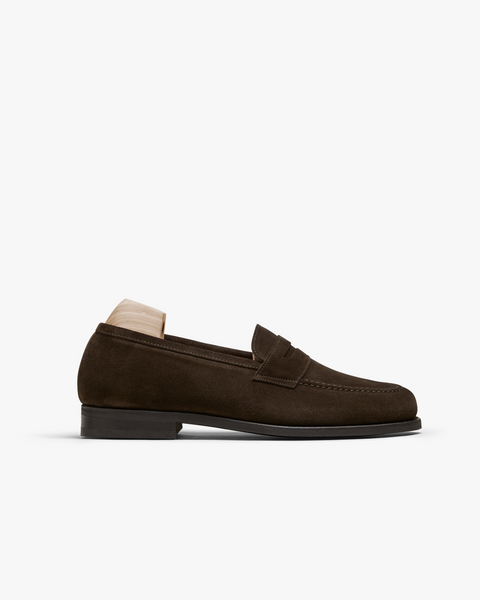
Shop protectorsWhether to spray at all divides suede wearers. Some skip it, to keep the character untreated suede develops over time; others spray a new pair before its first wear, so it sheds stains and spills and every clean afterwards is easier. Our advice is to go by colour: pale suedes show every mark, so those are the ones to protect; dark brown, black and navy get by fine without. For the application method, the darkening question and how often to top up, see our guide to waterproofing shoes.
Suede's cousins
Suede, nubuck and roughout are three cuts of one hide, and nearly everything above holds for all three: brush them, protect them, and clean them dry before water comes into it. Suede is the softest, an inner split with the deepest nap. Nubuck is the sanded outer grain — tougher in wear, though its fine surface scratches under a stiff metal brush, which is why it gets softer tools and its own care guide. Roughout is full-grain leather turned flesh-side out, the thickest of the family. One rule covers all three: never put smooth-leather cream or wax polish on any of them, or the nap flattens for good.
Little and often
Brush the shoes after every wear, before the day's dust works into the nap, and the deep clean rarely comes up at all. Keep the shampoo for marks that brushing and erasing genuinely won't lift. Beyond that, treat suede like any good shoe: don't wear the same pair two days running, keep cedar trees in them to hold the shape and soak up the moisture, and store them away from direct sun and heat. Looked after that way, a pair only gets better with age — and everything we make for the job is in our suede care collection.
A few more questions
How do I get automotive grease out of suede?
Heavy automotive grease often won't come up with the cornflour-and-brush method on its own. Work a little WD-40 into the stain with an old toothbrush before you clean it again — it's the exception to treating oil marks dry, and it shifts the sort of grease a brush alone leaves behind.
Can I clean suede without a proper kit?
In a pinch, yes. A clean, dry nail brush lifts everyday dirt, a pencil eraser rubs out light scuffs, and cornflour left over an oil mark overnight stands in for a proper deep-clean powder. None of it matches a real suede brush and protector over the long run, but it'll get you through.
What if a scuff won't brush out?
Hold the shoe in the steam over a boiling kettle for a moment; the damp heat raises the flattened fibres. Brush in one direction once it's cool enough to handle — that lifts a set-in scuff a dry brush won't shift on its own.
Is nubuck more water-resistant than suede?
A little. Nubuck's sanded, denser grain sheds light moisture slightly better than suede's soft, open nap, and roughout, full-grain leather turned flesh-side out, is the most water-resistant of the three. None of them is waterproof, though, without a protector spray.


