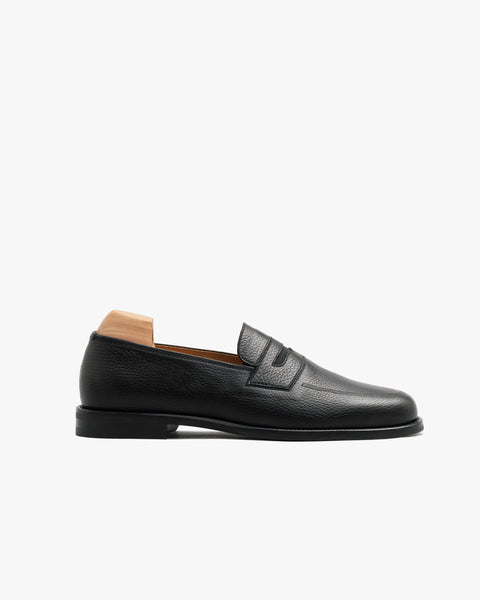
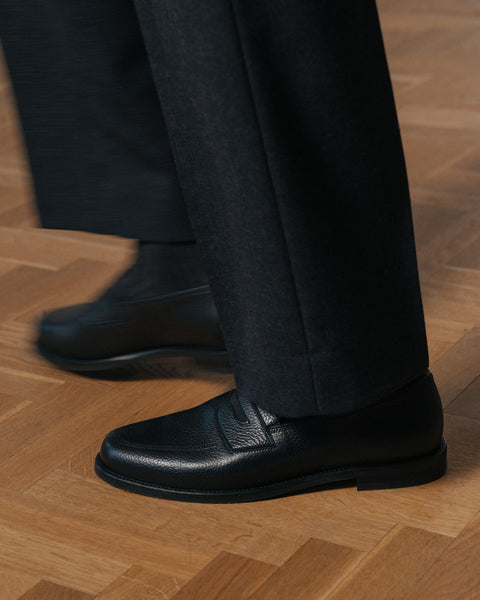
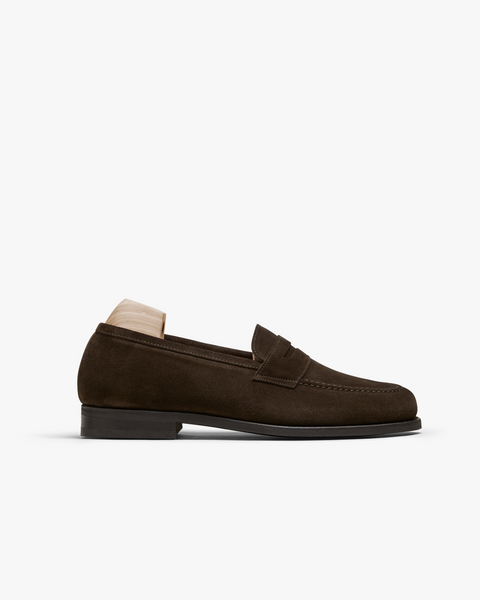
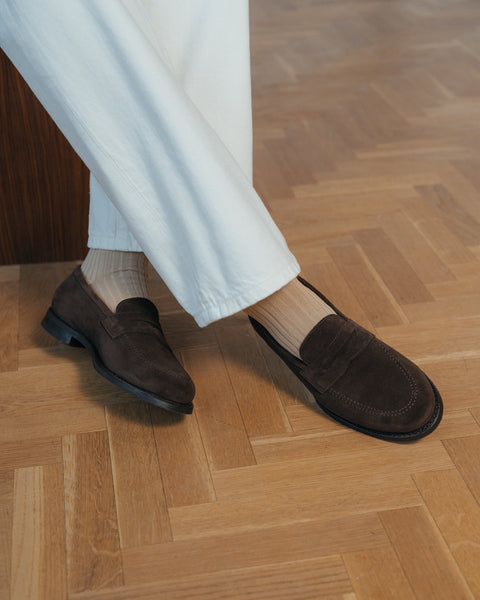
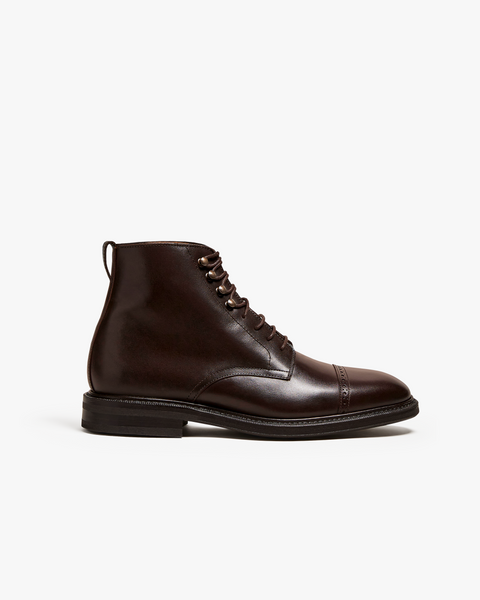
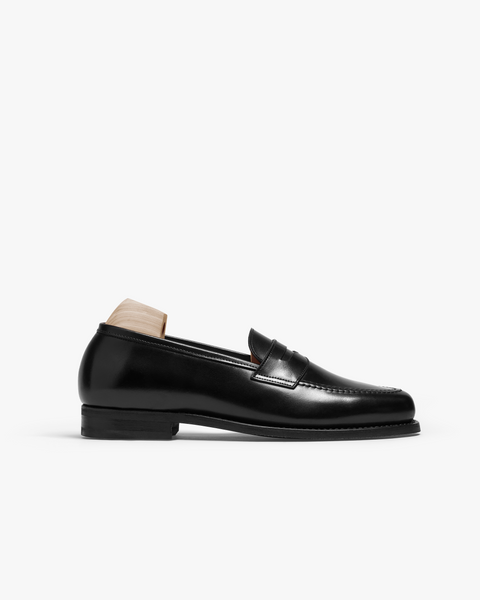
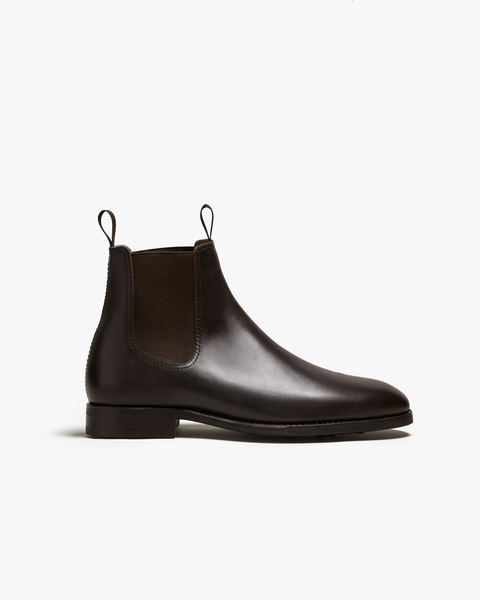
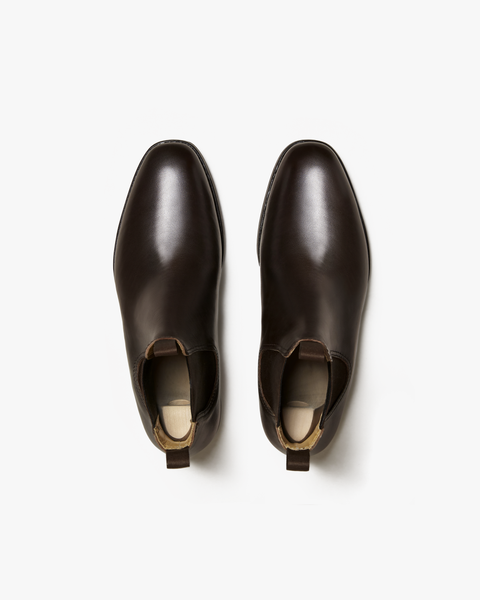
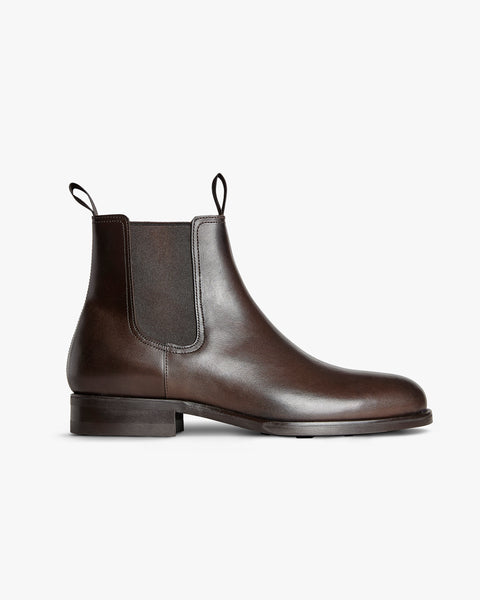
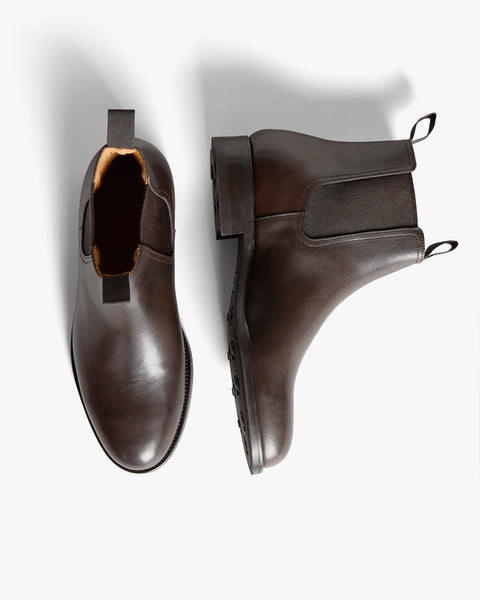


Cleaning leather shoes takes fifteen minutes every few weeks, no more. Brush off the dust, wipe the leather with a barely damp cloth, let it dry away from heat, then work in a thin coat of shoe cream and buff it back up. Cream feeds the leather and leaves a soft shine; wax goes over the top for water resistance and the deeper gloss — cream across the whole shoe, wax on the toe and heel alone. Between times, a ten-second brush after each wear does most of the work.
The leather shoes you wear most are the ones that dull first and stiffen where they bend. Putting that right is quick work: fifteen minutes every few weeks, and a kit that runs to about half a dozen things.
It gets easier still once you understand why leather behaves the way it does, which is where this guide begins. The routine, the products and the stain fixes all follow from it.
Leather is skin
Leather is skin. Tanning stops it rotting, but it behaves like skin for the rest of its life: it holds natural oils, it dries out, and dry skin goes stiff and cracks. Wear pulls those oils out — rain, road salt, central heating, a long day on hard pavement. On a shoe, the cracking starts at the flex points: the vamp and the creases across the instep, where the leather bends with every step.
So care is two jobs, done by two products: cream puts the oils back, wax sits on the surface as a barrier against water and scuffs. Feed the whole shoe; protect the stiff parts. Nearly everything else in this guide follows from those two jobs.
The fifteen-minute routine
The full routine takes fifteen to twenty minutes. Lay down some newspaper, or work somewhere you don't mind a fleck of polish landing. The kit is short: a horsehair brush, a soft cloth, a shoe cream or conditioner, and a pair of shoe trees. One check before you start — if the leather is caked with old polish or ground-in dirt, strip it back with a little saddle soap or a deglazer first. Fresh cream laid over dirt just seals the dirt in.
Unlace and dry-brush
Pull the laces out so nothing is hidden, then brush off the loose dirt with a horsehair brush, working into the welt and the seams where grit collects. Grit under a polishing cloth drags across the leather and scratches it, so this always comes first.
Wipe the leather down
Wipe the uppers with a cloth barely damp with water, or a dedicated leather cleaner, working in small circles. Damp, never wet — soaking the leather does more harm than the dirt did.

Let them dry
Rest the shoes at room temperature, well away from radiators and direct sun. Heat cracks and discolours leather; slow drying doesn't. Slide the cedar trees in while the shoe is still warm, so it sets on the last rather than around a crease.

Condition the leather
Work a thin, even coat of shoe cream into the leather with a cloth. Leave it ten to fifteen minutes to sink in, then buff the excess off with a clean brush.

Polish for shine
Work a little wax over the toe and heel with a cloth, let it haze, then brush it up briskly. Build two or three thin coats where you want more depth, no more.

Feeding the leather
Cream is the base coat and goes over the whole shoe, because all of the leather needs feeding; shoe wax stays on the toe and heel, the stiff parts that don't flex. Cream first, left to absorb, then wax over the top — and if you only ever buy one of the two, buy the cream. The full cream-versus-wax logic, layer by layer, is in the polishing guide.
How often is a question of what the leather looks like, not the calendar. Condition when the surface starts to look dry, which for regular wear lands somewhere around every six to eight wears, and put the coat on the same way as in the routine above — thin and even, left to sink in, then buffed back. Keep every coat thin. Too much product doesn't feed the leather; it gums up on the surface and ages the shoe faster than neglect would. Between conditionings, the ten-second brush after each wear does more good than anything in a jar, and the full leather care range covers everything past that.
A new pair needs nothing at all. Good shoes are conditioned in the tannery drum and arrive already fed and lightly polished, so the first wear needs a brush and nothing more. Wait until the leather starts to look dry or the first creases set in — that's the shoe telling you it's ready. A light coat of wax on the toe before the first outing guards against an early scuff, and a very dry climate brings the first conditioning forward. Suede and nubuck are the exception: give them a protector spray and about twenty-four hours to set before you wear them.
Decoding the Saphir wall
Shop SaphirThe Saphir shelf is genuinely bewildering the first time you stand in front of it — rows of jars and tins that all look nearly the same. One rule cuts through most of it: glass jars hold cream, for feeding, recolouring and a soft shine; metal tins hold wax, for the high shine. For smooth leather you only need two. Saphir Créme Pommadier is the Médaille d'Or cream: it cleans, nourishes and waterproofs in one pass, and builds a patina over time. Saphir Pâte de Luxe is the hard wax, with twice the pigment of an ordinary polish for shine and protection. Add Mirror Gloss on top of those two only if you want a true mirror.
Renovateur, the mink-oil 'leather food' a lot of people reach for out of habit, sits outside this routine. Pommadier already cleans and feeds smooth calf on its own, so you don't need both.
Mirror shine, in brief
A mirror shine (a spit shine, in the older phrase) is the optional extra: thin layer on thin layer of hard wax, built only on the toe cap and heel counter, the two places the leather doesn't flex — the rest of the shoe stays matte. The full method, from base coats to the drop of cold water, lives in our guide to polishing shoes. A black calf toe finished this way is also the modern answer to a black-tie dress code.
Watch: caring for leather shoes
Tide lines and salt rings
Two of the marks that look permanent aren't. That pale tide line from a puddle is just uneven drying: damp the whole panel down so it dries as one piece, then feed the leather once it's dry — the full mechanism, and what to do with a properly soaked pair, is in our guide to waterproofing shoes.
Salt is the other. Wipe the white ring with a one-to-one mix of white vinegar and distilled water, then condition and re-polish. Keep to that dilution: household vinegar is far more acidic than the leather, and at full strength it will lift the dye. Better still, wipe the salt off the moment you get indoors, before it dries in. If a mark won't move at all, you may be looking at the dye bleeding rather than a stain, and that's one to send back to the maker. Suede and nubuck are different here: let them dry, brush them, and use a suede cleaner, never the vinegar.
The kit, storage and rotation
The shopping list, in full: a horsehair brush, a soft polishing cloth, a leather cleaner, a cream in your shoe's colour, a wax and a pair of cedar trees. A small dauber to keep cream out of the welt stitching is a useful extra, and that's the lot. Our Leather Shoe Care Kit gathers the cream, wax, brush and cloth into one box if you'd rather not assemble it piece by piece.
Whether the premium tier is worth it is a fair question. Saphir's natural oils and beeswax do leave a richer, more even finish, and it's what we stock. But Lincoln, Angelus and Meltonian all do good work for less, and Kiwi is perfectly fine for an everyday wax shine. Whatever you land on, a little goes a long way — a single tin of cream will see a pair through several years.
The essentials
View all


Where the pair sits between wears matters more than most people think. Keep them out of direct sun, somewhere with a little air (the box they came in is fine, as long as it isn't sealed airtight), and feed a pair before it goes into long storage. The cedar trees handle the rest: they keep the shoe on its last, draw the day's damp out of the leather, and stop the creases hardening as it dries.
Nothing else you do matters as much as rotation. Give a pair the best part of a day off between wears and the leather releases the moisture your foot drove in and settles back into shape, so a pair rested every other wear outlasts the same pair worn day after day by more than double. Conditioning stretches the miles between resoles too, and because a Goodyear-welted shoe is stitched at the welt rather than straight onto the upper, a cobbler can rebuild the sole without touching the leather above it.
Suede, nubuck, and the rest
Everything to this point assumes smooth calf. Suede and nubuck are cleaned dry, and never given cream or wax — it crushes the nap flat where it should stay soft. They're different enough to have their own guides, cleaning suede and caring for nubuck. The two get muddled constantly, and the wrong product on either is hard to undo, so check which you have before you start.
For a calf dress shoe, the cream-and-wax routine above is all it ever needs.
A few more
Is Saphir Renovateur a conditioner or a polish, and is the mink oil safe?
A conditioner, not a polish. Renovateur is a mink-oil 'leather food' — it feeds the leather rather than shining it, so it does nothing a wax does. The mink oil is safe on smooth leather and has been in use for years without trouble. Treat it as a nice-to-have rather than a need, since Pommadier cream already cleans and feeds calf on its own.
Is Saphir Médaille d'Or worth it over Beauté du Cuir?
Not by as much as the forums suggest. Médaille d'Or carries a higher concentration of hard wax, so it has a slight edge on gloss, but Beauté du Cuir comes in more colours and shines up nearly as well. For most people the cheaper line is no real compromise.
How do you dry leather shoes that got wet?
Slowly, and nowhere near heat. Leave them at room temperature, away from radiators and direct sun, which crack and discolour wet leather far faster than air ever does. Pack cedar trees or loosely crumpled paper inside to hold the shape and draw the moisture out, then condition the leather once it's completely dry. The step-by-step recovery for a properly soaked pair is in the waterproofing guide.


