
For black tie, one shoe is always safe: a plain black oxford with no toe cap and no broguing, in patent leather or in calf polished to a mirror shine. Patent is the traditional choice, and the most formal shoe of all is the patent opera pump with a grosgrain bow, but a well-polished plain black oxford is just as accepted and far more useful to own. Keep it black, keep it glossy, and keep it plain.
By the time you get to shoes, the tuxedo has already made most of your decisions for you. The jacket is black or midnight blue, the shirt is white, the bow tie is silk. The shoes are the one choice left — and they happen to be where the dress code is strictest.
The good news is that the rules aren't arbitrary. There is one idea behind all of them, and once you understand it, you can work out the right pair for any invitation without memorising anything. So we'll start with the idea, and then go through the shoes one by one, from the most formal to the most relaxed.
Why evening shoes shine
A tuxedo is built on a contrast between two textures. The suit itself is matte — a deep black wool that doesn't reflect much of anything. The details that make it evening wear are all silk, and they shine: the lapels, the braid down the trouser leg, the bow tie. That contrast is the whole design. It's what makes a tuxedo a tuxedo, rather than a black suit.
The shoe's job is to match the silk, not the wool. That's why evening shoes are glossy where business shoes are simply polished. Patent leather, with its hard, glass-like finish, was the standard from the 1850s to the 1950s; since then, black calf polished to a mirror shine has become just as accepted. Both give you the same effect. An ordinary matte shoe, however good, looks like it belongs at the office.
The other half of the idea is plainness. Every seam, stitch and decoration breaks up the surface and dulls the effect, so the more formal the occasion, the plainer the shoe should be. Gloss and plainness — those two principles are the entire rulebook. The rest of this guide just applies them, shoe by shoe.
The opera pump
The most formal option is a shoe most men have never worn. The opera pump is a low-cut slipper in patent leather with a flat grosgrain bow on the front. It comes from court dress, and it was made for evenings spent indoors. On paper it's nearly perfect (all gloss, with not even laces to break the surface), and traditionalists still consider it the most correct black-tie shoe there is. In practice, they'll also admit they rarely see one. Some find it dated, or a little precious, and many people who love evening dress save it for white tie.
If you're tempted (and on the right evening it's a genuinely elegant shoe), the practical warning is fit. A pump has no laces to take up any slack, so it has to fit exactly, or it will slip at the heel with every step. Try a pair on before you buy.


The oxford
Shop black oxfordsOne step down is the black oxford, and for nearly everyone this is the right place to stop. The evening version is as plain as an oxford gets: closed lacing, no toe cap, no broguing. The only real decision is the leather, patent or calf, and it's a smaller decision than people think.
Patent isn't the more formal of the two, despite its reputation. The real difference is what else you can use the shoe for. Patent only works with a tuxedo; you'll never wear it with anything else you own. A mirror-shined calf oxford also works with a dark suit — for an interview, a wedding, a funeral. So if black tie only comes up every few years, buy the calf and learn the shine (we cover it below); the same pair will handle a decade of everything else. If you get evening invitations regularly, patent makes more sense: the gloss is part of the finish, so the shoes never need polishing and are always ready. One thing to avoid either way is the cheap PVC sold as 'patent'. It looks plasticky up close, and it cracks and peels, while real patent leather lasts.
Then there's the toe, which is the one detail people genuinely argue about. Purists say only a completely plain toe belongs at black tie. Pragmatists, including some respected shoemakers, say a clean cap-toe is fine, as long as there's no broguing on it. Our advice: go by the event. The more traditional it is, the plainer your toe should be.
The one shape everyone agrees on is the whole-cut, where the upper is cut from a single piece of leather with no seams at all. It's the plainest an oxford can be, and the smooth surface takes a mirror shine better than any other. That's why our Drottningholm, the shoe we make for strict black tie, is a patent whole-cut. (Our black calf oxfords are cap-toes and semi-brogues — better suited to dark suits and wedding-guest outfits than to the strictest dress codes.) Whatever you choose, skip the brogues, wingtips, derbies and heavy welted soles. However black and however shiny, they're day shoes.
Loafers and velvet slippers
Everything below the oxford is a slip-on, and this is where you need to read the room. Strictly speaking, a tuxedo calls for an oxford or a pump, and at a traditional event, a formal wedding above all, we'd stop there. But dress codes have relaxed over the years, and at less formal events, two slip-ons have become acceptable.
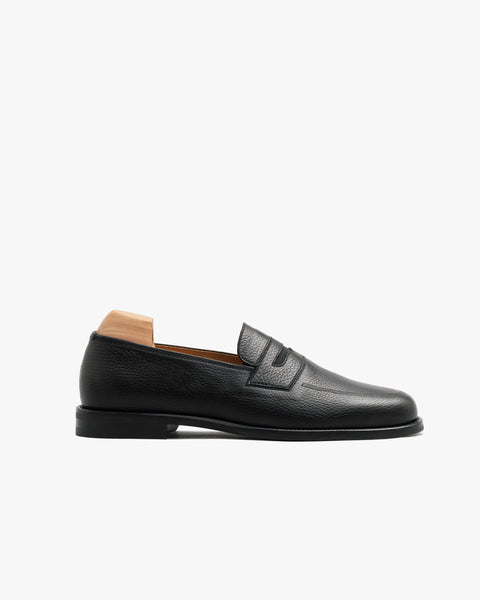
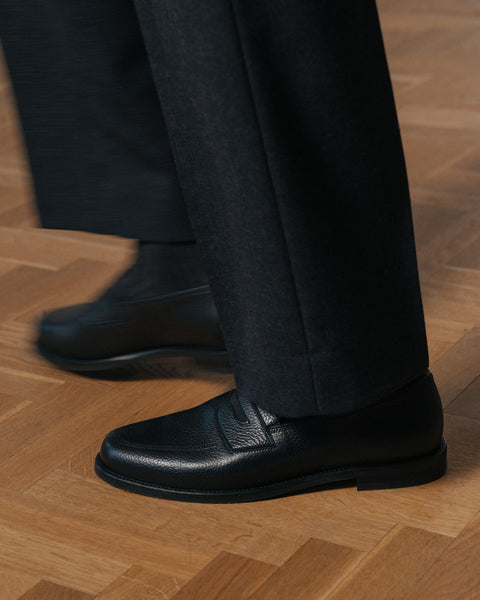
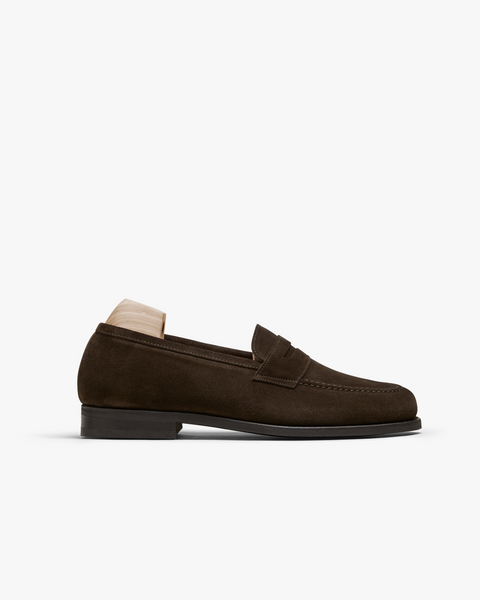
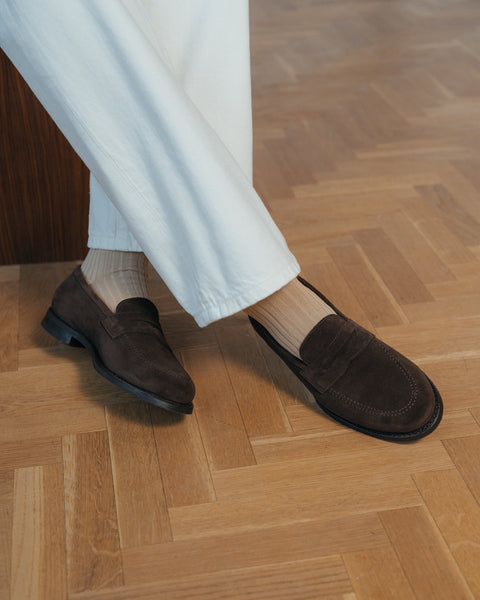
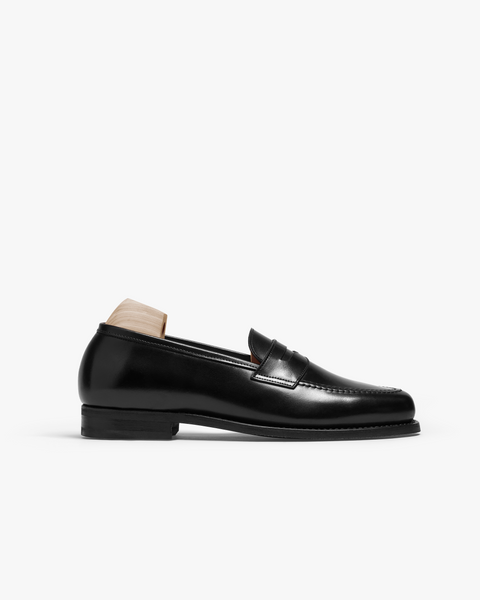
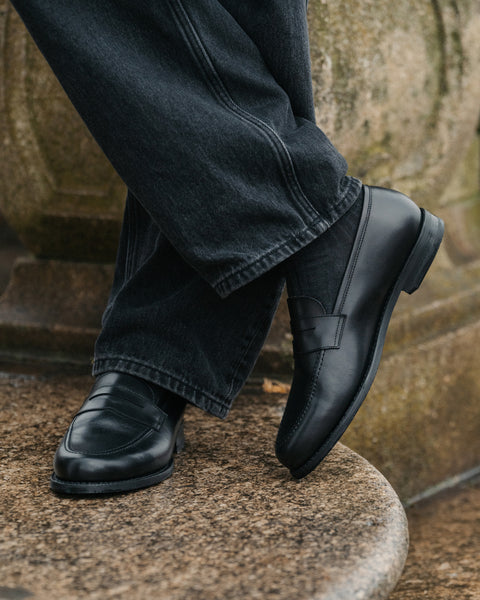
The first is the evening loafer: black patent, or a sleek Venetian style, with no strap, no tassel and no metal hardware. If the invitation says black tie optional or creative black tie, it works. A tassel or horsebit loafer doesn't, whatever the colour — they're day shoes. (Which loafer belongs where is a subject of its own; we've written a separate guide to wearing loafers.) Our Ängby in black patent is a Belgian slip-on made for exactly this kind of event.
The second is the velvet slipper, along with its embroidered cousin, the Albert. These started out as a host's shoe, worn at home with a smoking jacket, and people still disagree about wearing them out — which is exactly why they suit events where some flair is welcome. Black keeps the outfit uniform; burgundy adds one spot of colour to an otherwise black-and-white look. Wear them to a creative dress code if you like standing out a little. For a traditional wedding, leave them at home.
The black-tie shoes we make
View all


Getting the mirror shine
Shop leather careIf you've gone with calf, the mirror shine is what makes the shoe formal enough, and it takes more patience than an ordinary polish. The idea is to build the shine in layers: condition the leather first, then apply thin coats of hard wax with a little water until the surface turns to glass. Many thin coats work better than a few thick ones, and the high shine should stay on the toe and heel — the stiff parts of the shoe, which don't flex when you walk. The full routine is in our guide to polishing shoes; the short version looks like this.
Clean and condition
Clean the shoes, then work a thin coat of Saphir Créme Pommadier into the leather to feed it and lay a base. Let it absorb, then buff.
Lay the wax base
Apply a thin, even layer of Saphir Pâte de Luxe wax over the toe and heel with small circular motions, and let it haze.
Build the shine with water
Add further wax in very thin coats, each with a single drop of cold water, buffing between coats. Keep the high gloss on the stiff toe and heel counters — calf is porous and needs to breathe, so do not lacquer the whole shoe.
Finish the toe and heel
Finish with Saphir Mirror Gloss on the toe and heel for the last degree of brilliance, buffing until the surface reflects.
Patent needs none of this. Wipe it with a damp cloth, buff it with a soft one, and it's done — which is half the appeal.
Socks, trousers and the small print
A few details around the shoe make the difference between a sharp tuxedo and a rented-looking one. Wear black silk socks, over the calf, so no skin shows when you sit down — the soft sheen of silk matches the braid on the trousers. Have the trousers hemmed so they barely break, with the hem just touching the shoe. And go for the quieter option in the small choices: a thin leather sole rather than rubber, laces in silk or thin patent, an almond toe rather than a square one. On colour: a midnight-blue tuxedo still gets black shoes, never blue ones, though your socks can be midnight blue to match.


Reading the invitation
Everything above assumes the invitation says black tie, full stop. 'Black tie optional' loosens things up: a dark suit becomes acceptable, and so do black derbies and monk straps, the evening loafer and the velvet slipper. But optional doesn't mean casual. The shoes should still be dark leather, and your ankles should still be covered. When in doubt, the rule is simple: the more formal the host and the venue, the plainer and shinier the shoe.
And if you're unsure the night before, remember that a well-polished plain black oxford is the safe answer at anything short of the most traditional events. Everything we make for black tie is in our tuxedo shoes collection.
One last question
Can you wear trainers with a tuxedo?
No. Trainers undo a tuxedo's formality completely, and even at a black-tie-optional event the minimum is a proper dark leather shoe with the ankle covered.


