
Almost every dress shoe belongs to one of six families: the oxford, the derby, the monk strap, the loafer, the brogue and the dress boot. The quickest way to sort them is by how they fasten: laced for the oxford and derby, buckled for the monk strap, slipped on for the loafer, pulled on for the chelsea boot. The quickest way to rank them is formality, which runs oxford, then derby, then monk, then loafer. For a suit, a wedding or an interview, a plain black cap-toe oxford on a leather sole is the safe answer. Broguing and toe caps aren't families of their own, just decoration laid over the shoe, and the more decoration a shoe carries, the less formal it is.
The confusing part of buying a dress shoe is rarely the shoe. It's the names: oxford, derby, monk strap, brogue, wingtip, chelsea — and that's before you've reached colour or price. The good news is that nearly all of them sort into six families, and you can place any shoe in its family by checking one thing: how it fastens. The decoration on top of that, the punched holes and toe caps, tells you how formal it is. Run both checks and you can read almost any dress shoe.
The vocabulary underneath it all (the parts of the upper, what a welt actually does) sits in our guide to the anatomy of a dress shoe. Here we start with the families themselves.
The six families
The six are the oxford, the derby, the monk strap, the loafer, the brogue and the dress boot. The shape of the toe and the colour of the leather don't separate them; the closure does. Oxfords and derbies lace. The monk strap swaps the laces for a buckle. The loafer has no fastening at all and simply slips on. A dress boot covers the ankle and either pulls on, like the chelsea, or laces up a short shaft, like the chukka.
The odd one out is the brogue. Broguing (the pattern of punched holes) isn't a shape at all, and neither is a toe cap. Both are decoration laid over the families above, which is why a brogue can be an oxford one minute and a derby the next, and a cap toe turns up almost anywhere. So read a shoe in two passes: the lacing first, to find the family, then the decoration, to see how formal it is within that family.
Sewn shut, or left open
Start with the two that lace, because telling them apart is the first skill worth having. The difference is only in the lacing: an oxford's is sewn shut at the bottom, a derby's stays open. Once you've done it once or twice, you'll spot it at a glance.
The closure does more than name the shoe. Closed lacing makes the oxford the sleeker and dressier of the two; open lacing makes the derby more relaxed, and roomier on a wide or high-instep foot. For the fuller comparison (the balmoral and blucher names, and where the monk strap lands between the two), we've written a separate oxford vs derby vs monk guide.
No laces required
Two of the families have no laces at all. The monk strap fastens across the instep with a buckle, sometimes two, and sits between the oxford and the derby on formality — smart enough for a suit in most offices. Within that range, a plain single-buckle monk in dark calf reads dressier, while a wider strap or a second buckle turns it more casual, to the point where some people rank monks alongside derbies and loafers rather than above them. Ours is the Ålsten, a cap-toe double monk.
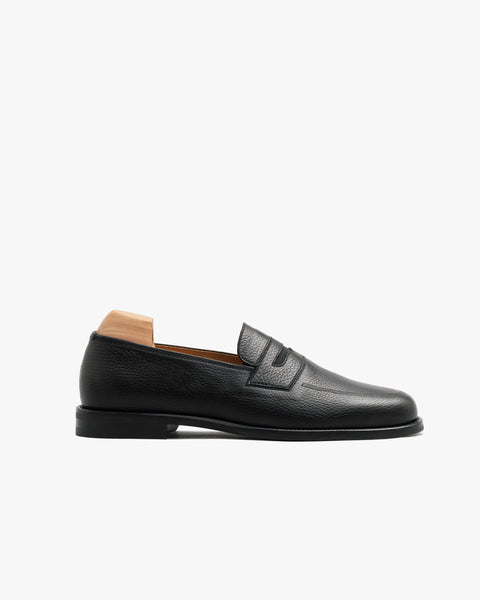
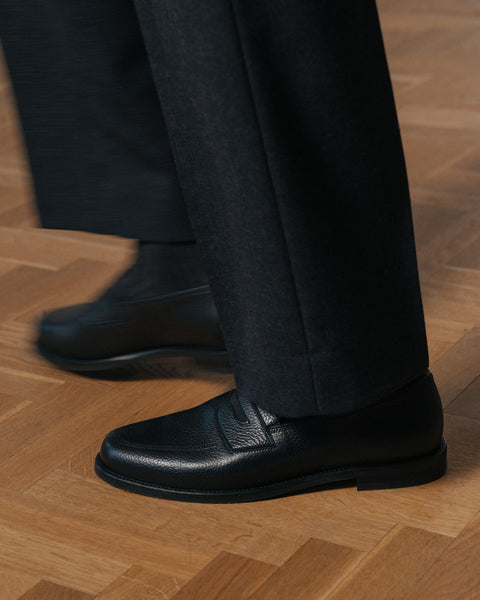
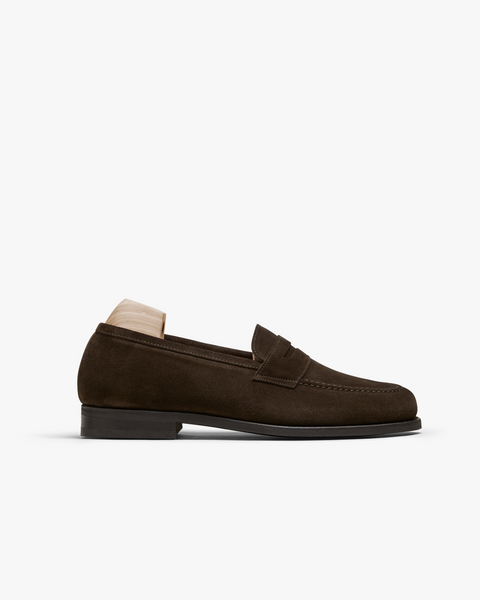
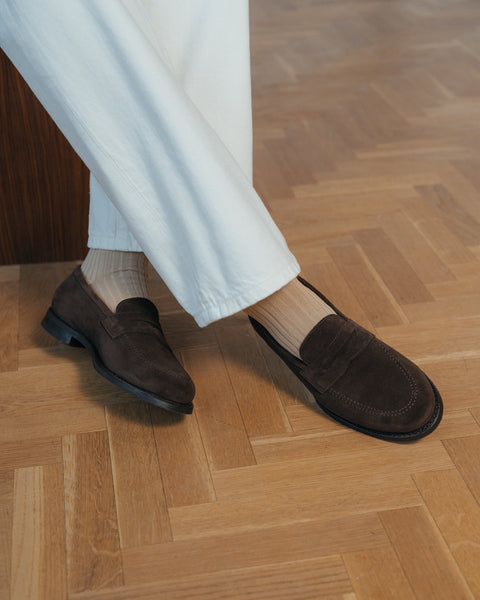
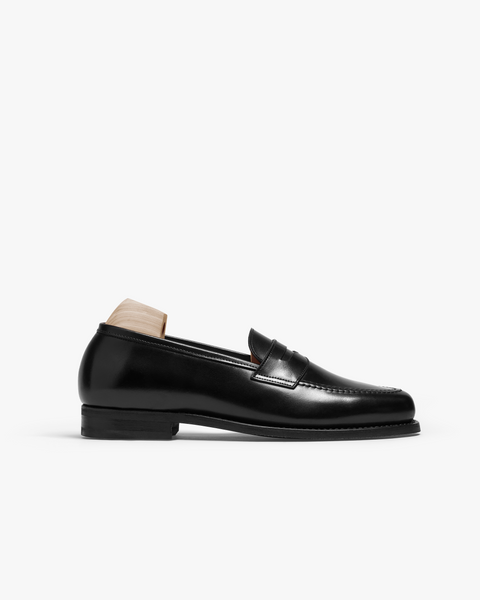
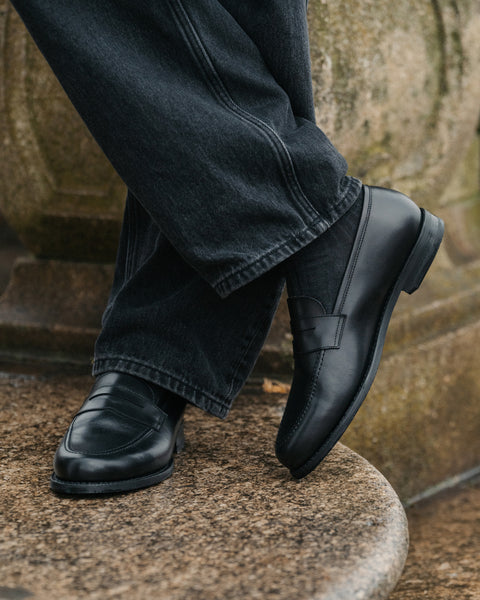
The loafer drops the fastening entirely and slips on, which as a rule puts it a step below any lace-up. The penny is the most versatile of them and the pair to buy first; the tassel is slightly dressier but reads as leisure; the horsebit is the most fashion-forward of the three. The leather matters more than the sub-style, though: a polished black loafer dresses up, the same shape in suede dresses down, so choose by what the rest of the outfit is doing.
Pull-on or lace-up
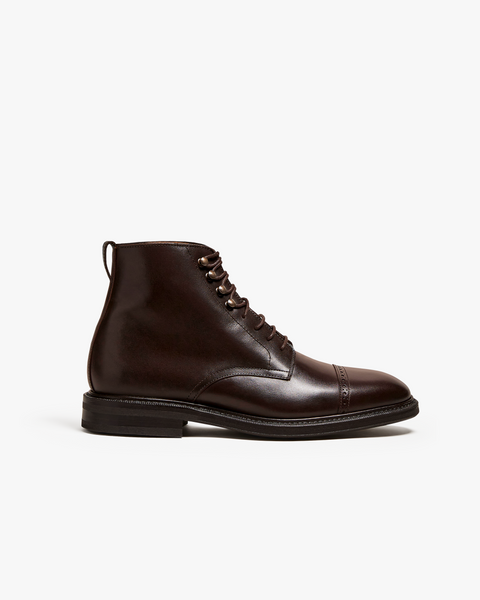
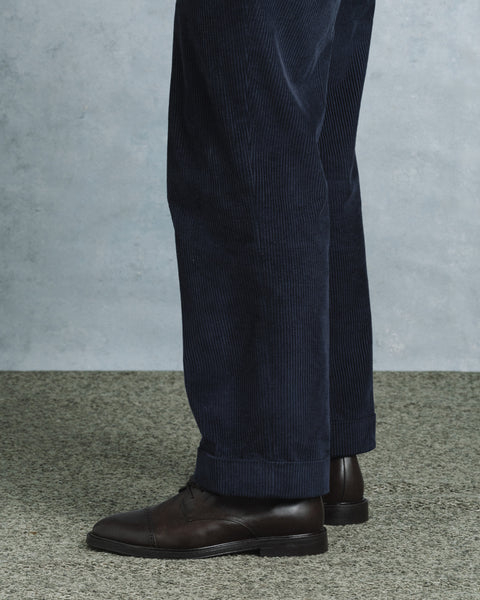
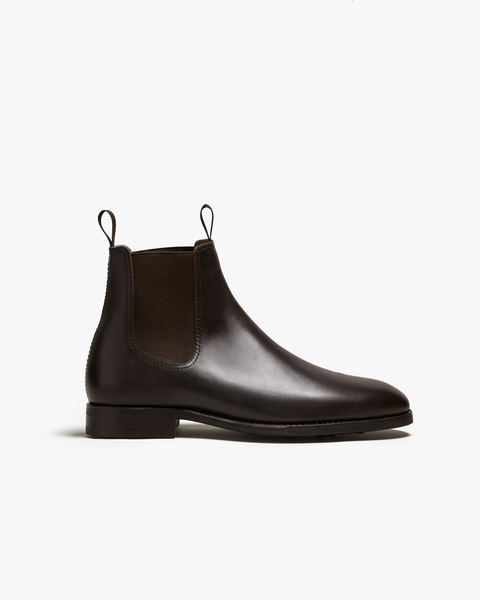
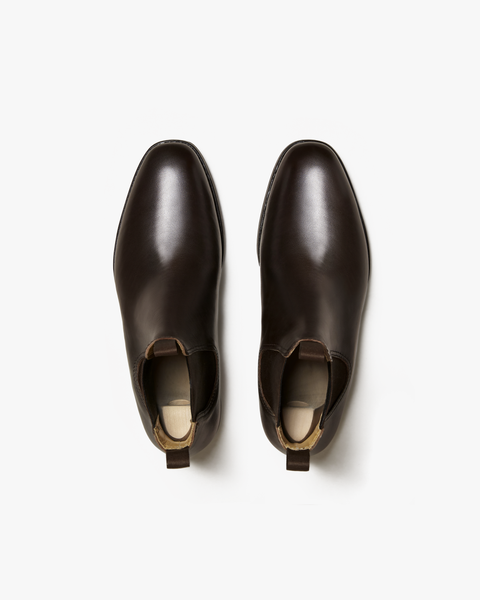
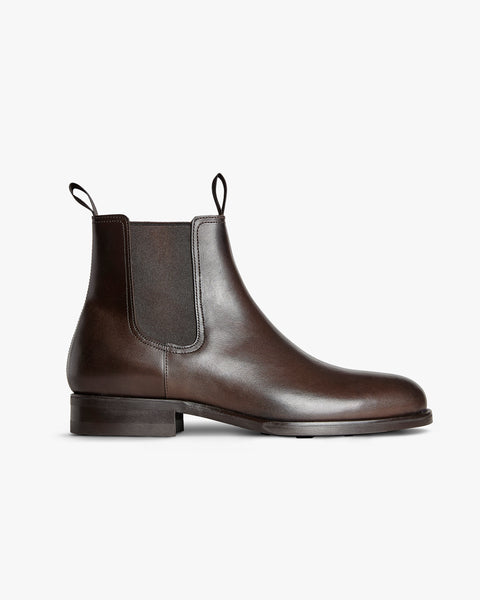
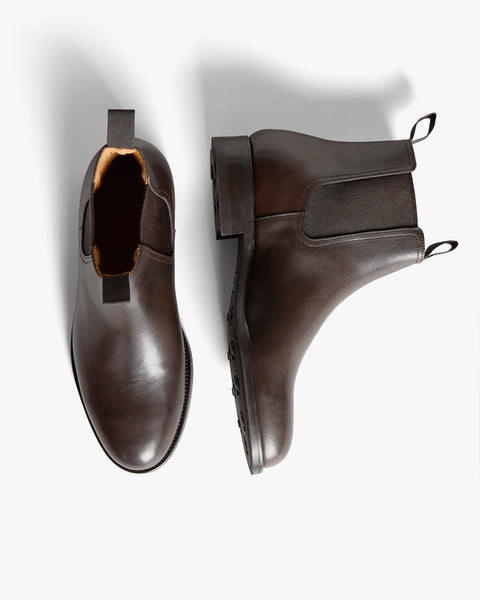
The last family covers the ankle. A dress boot handles the same occasions as its low-shoe equivalent, with more protection from the weather and a notch less formality, and two shapes matter here. The chelsea is the dressier: a pull-on with no laces, just a panel of elastic at each side and an otherwise unbroken run of leather. In smooth dark calf on a slim toe it works with a suit, and the styling is a subject of its own — we cover it in our guide to wearing chelsea boots. The chukka laces instead, a short shaft closed with two or three eyelets, and it tops out at smart-casual; in suede on a crepe sole it becomes the desert boot.
As a rule boots rank below shoes, with one clear exception: a black polished-calf chelsea reaches business-formal. Otherwise the usual signals apply — dark smooth leather dresses a boot up, suede and rubber soles bring it down. Our chelsea is the Granhult, whole-cut in calf.
Broguing and toe caps
That's every family; the second pass is the decoration. Broguing is the decorative perforation punched into the leather, and the rule is dependable: the more of it a shoe has, the less formal it is. From most formal down, the run goes quarter brogue, where the holes only trace the toe-cap seam; then the semi, or half-brogue; then the full brogue, or wingtip, with its W-shaped toe cap and a punched medallion on the toe; and last the longwing, the American cut whose wing runs all the way back to the heel — the most casual of the lot.
The toe follows the same logic: the less there is on it, the dressier the shoe. A wholecut is made from a single piece of leather with no seam across the toe at all, which makes it the dressiest of them and the usual choice for evening. A plain toe comes next, and the cap toe, with its seam across the front, is the everyday business standard. None of this replaces the family underneath (broguing and toe caps appear on oxfords and derbies alike), so it takes both readings, family and decoration, to place a shoe properly.
Where everything lands
Put the two passes together and you get the ranking: oxford, then derby, then monk strap, then loafer, then boot. Four details fine-tune it, in order. Lacing first, closed over open. Then decoration, plain over brogued. Then colour: black ahead of dark brown, burgundy and tan. Then material and sole, polished calf on a leather sole ahead of suede or rubber. Run any shoe through those four and you can place it. For a suit, a wedding or an interview, the safe choice is a plain black cap-toe or wholecut oxford on a leather sole.
- Black cap-toe or wholecut oxford, leather sole — the most formal. Best for weddings, interviews and dark suits; kept plain and mirror-shined, the wholecut reaches black tie.
- Derby — business to smart-casual. Best for the office and everyday tailoring; wear with softer suits or chinos.
- Monk strap — business-casual. At home in most offices; wear with a suit or odd trousers.
- Loafer — smart-casual. Best for summer tailoring and off-duty; wear with chinos or unstructured suits.
- Brogue (full / wingtip) — smart-casual. Best for daytime and tweed; wear with odd trousers or denim.
- Chelsea boot — smart-casual, business in black calf. Best for the cooler months; wear with slim trousers or jeans.
- Chukka boot — casual to smart-casual. Best for weekends; wear with chinos or denim.
In practice, almost nobody can tell an oxford from a blucher across a room, so day to day you're better off judging the shoe in front of you on its sleekness, colour and shine than on its label. Black tie is the one place where the rules tighten rather than relax: plain black, either patent or a mirror-shined calf oxford, with nothing on the toe — no cap, no broguing. We've covered that end of the scale separately, in our guide to tuxedo and black-tie shoes.
The first three pairs
You don't need one of each. Three pairs, bought in this order, will see you through nearly anything. Start with a black cap-toe oxford; it covers suits, interviews and anything formal. Add a dark-brown derby next, for the office and the days that don't call for a suit. Then a loafer, for summer tailoring and time off. That's the wardrobe most people actually wear.
The upkeep is simple. Never wear the same pair two days in a row; the gap lets the leather dry, and a cedar shoe tree left in between wears holds the shape and pulls the day's moisture out. And when you buy, insist on one thing: construction. A Goodyear-welted or Blake-stitched shoe can be taken to a cobbler and resoled, so a good pair lasts for years; a cemented sole is glued on and can't be replaced. Our range is predominantly Goodyear-welted, handcrafted in Portugal, which means a worn pair can be rebuilt rather than thrown away. When you're ready to start the rotation, the full range is the place to begin.
Where to start: the first three
View all


