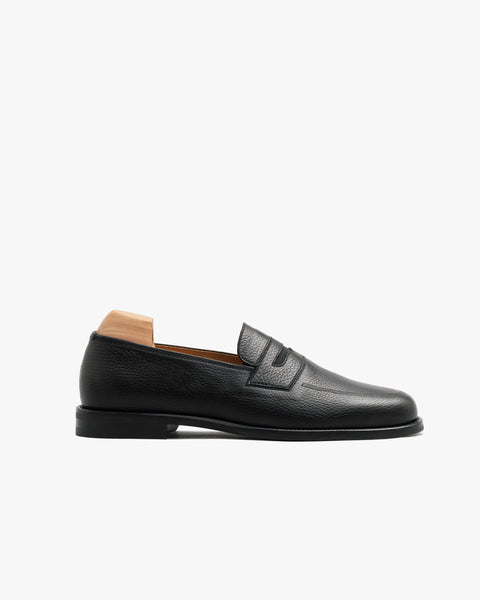
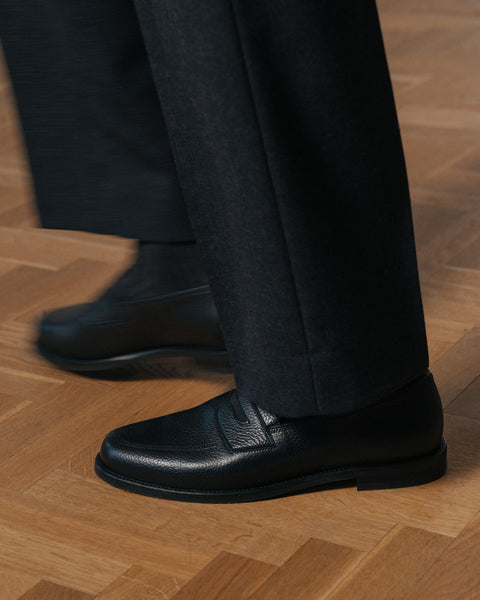
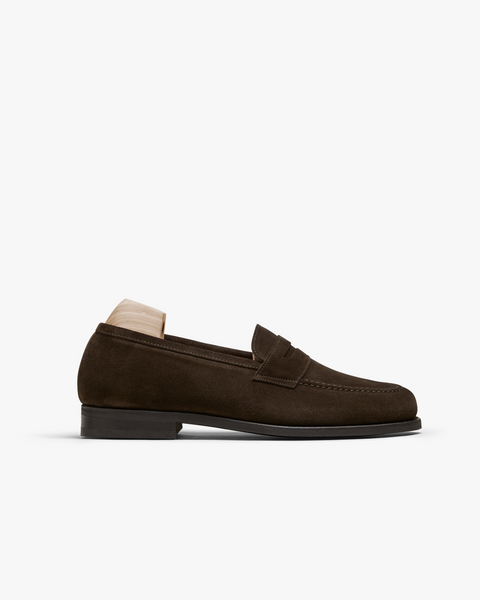
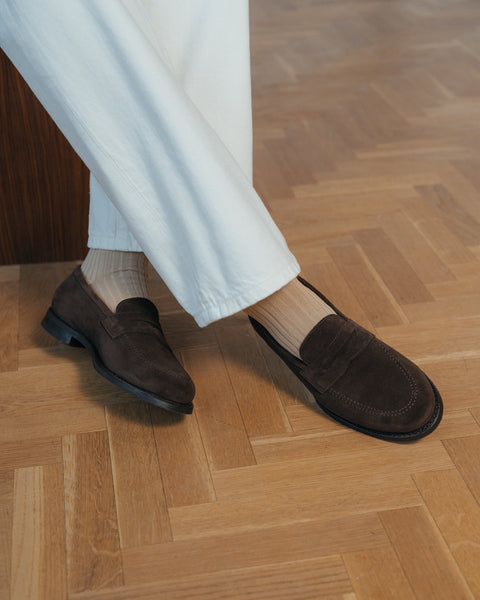


You can't make leather shoes fully waterproof, but you can make them properly water-resistant. To waterproof shoes in the practical sense: give suede and nubuck a light, even mist of a neutral protector spray and let it cure; give smooth calf cream, then a coat of wax. Thin, even coats beat one heavy treatment.
Sooner or later the rain catches every good pair. What you do before that day matters more than anything you can do after it, and it's simpler than the shelf of sprays and waxes suggests: protection is one honest job done properly, not a coat of magic.
First, be clear about what you're actually buying. Nothing in a tin will seal a leather shoe against water completely, and anything that could would ruin what makes the shoe worth wearing. So we'll start with why that is, then get to what works: the right treatment for each leather, applied evenly, and the recovery for the day it isn't enough.
Why leather isn't waterproof
Leather isn't waterproof. It never was: it's a skin, tanned so it doesn't rot, and it goes on behaving like one — porous enough to breathe and flex, porous enough to let water through once the rain keeps coming. That's true from smooth calf to suede and nubuck; the nap sides just show the water sooner. Add a shoe's stitching and seams, and you have a thing that was never designed to be sealed.
Genuinely waterproof footwear exists, but it's a different kind of shoe: rubber boots, or hiking boots sealed with membranes and heavy wax. They get there by giving up what you want from dress leather — the breathability, the finish, the way it ages. Which is why the dubbin and beeswax in the work-boot guides have no place here. Those treatments seal a surface, and dress calf needs to breathe.
So the realistic target is water-resistant, and for a dress shoe that's plenty. Clean suede already sheds light rain on its own, and waxed calf carries its own barrier; the treatments below just stretch both further.
Two leathers, two treatments
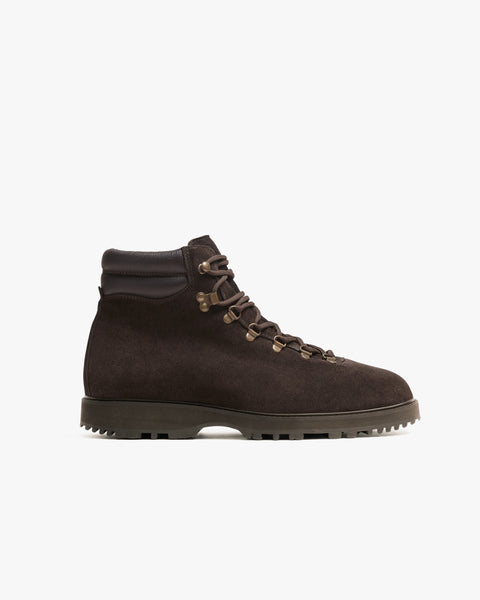
Which treatment a pair needs comes down to its leather, and there are only two answers. Anything with a nap — suede and nubuck — takes a protector spray and nothing else, because cream or wax would crush the nap flat. Smooth calf takes the cream-and-wax routine it should be getting anyway; the wax layer is the water barrier. Nubuck is a different leather to clean (we've covered it in its own guide), but it's protected exactly like suede, so the next two sections cover both.
Protecting suede and nubuck
Whether to spray at all genuinely divides suede wearers, and both camps have a point. Sprayed before its first wear, a pair sheds spills and stains, and every clean afterwards is easier. Left alone, it keeps the character untreated suede develops with age. Our advice is to go by colour: pale suedes show every mark, so those are the ones to protect; dark brown, black and navy get by fine without.
If you spray, use a neutral protector spray before the first wear, let it cure, then top it up every few wears or once a season. The same tin covers nubuck. Everything for the nap side lives in our suede care range, and the cleaning that should come before any spray is a guide of its own: how we clean suede.
Will the spray darken my suede?
The honest answer is that it depends on the spray, and a little on the suede. Cheap silicone sprays, and over-applying anything, can deepen the colour and flatten the nap — the nap usually brushes back once everything is dry; the colour is the risk. The quality nano protectors, Saphir's Super Invulner among them, are widely reported to leave the colour untouched.
Whatever's in the tin, test a hidden spot first: the inside of the heel, or under the throat where the laces sit. Let it dry fully before you judge the colour, then build the coverage in light passes rather than one heavy coat. Very pale suede is the exception — stone and sand shades can shift a shade whatever you use, so on those it's a patch test every time, and a fair question whether the protection is worth the risk.
Smooth calf: cream, then wax
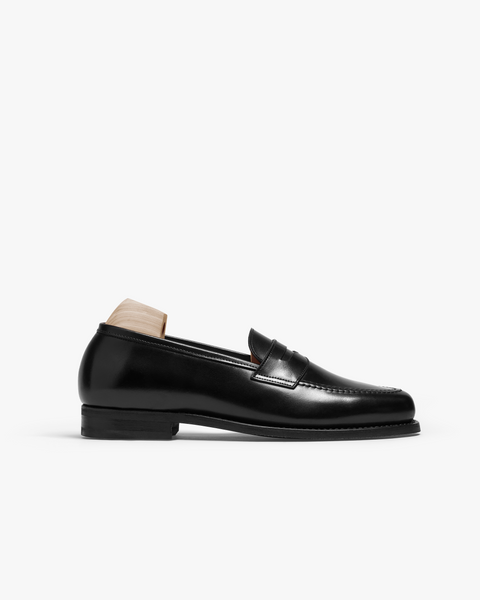
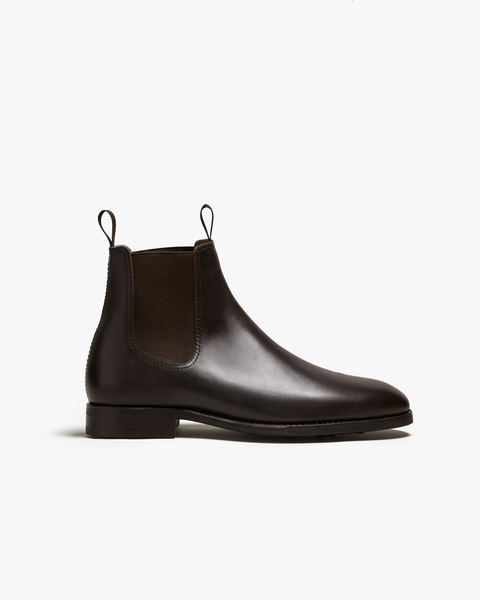
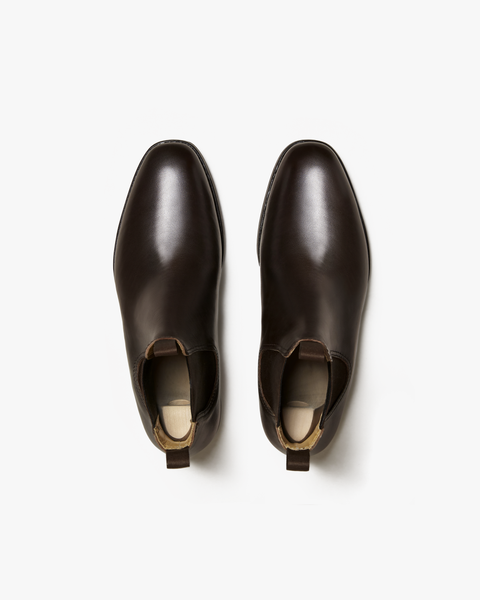
Smooth calf needs nothing new, because the routine that keeps the leather healthy is also what keeps water out. Cream feeds the leather and puts back the oils that rain pulls out; a Médaille d'Or cream like Saphir's Créme Pommadier cleans, nourishes and waterproofs in one pass. Wax is the barrier itself. It's mostly hard waxes, it doesn't sink in, and rain sits on the wax rather than in the leather. Keep cream across the whole shoe and wax on the toe and heel — built up anywhere the shoe bends, it cracks and flakes — and lay a fresh coat before a wet week.
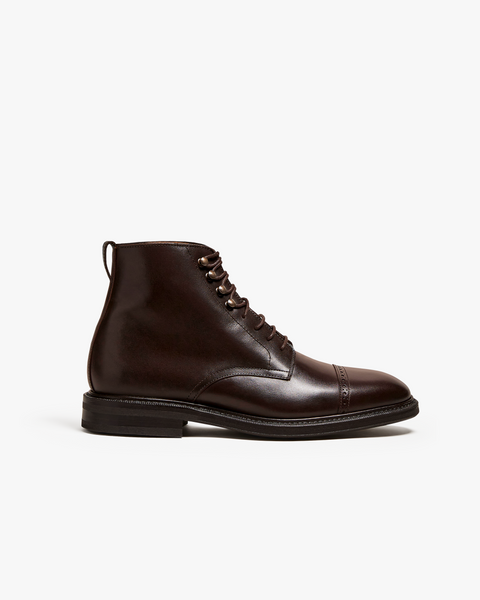
Dress boots in calf follow the same routine — go by the leather, not the height of the shaft. And none of it calls for the dubbin and grease we ruled out earlier. The full routine, and the vinegar fix for salt rings, is in our leather care guide.
Applying a protector spray, step by step
However good the spray, the result comes down to how you apply it. Work outdoors or by an open window, pull the laces out, and think in whole panels: cover each one fully and evenly rather than chasing spots — patchy coverage dries with edges of its own.
Start clean and dry
Brush the shoe clean and make sure it's completely dry. A protector locks in whatever sits under it, so marks and dust come off first.
Test a hidden spot
Mist a spot that doesn't show — inside the heel, or under the throat — let it dry, and check the colour has held. Pale shades get this test every time.
Mist evenly from about 20 cm
Lay the protector on in light coats from about 20 cm, covering each panel edge to edge. Build the coverage in a few passes rather than one heavy soak; over-applying deepens the colour and flattens the nap.
Let it cure, then brush
Let the spray dry right through before the shoes go out — count on a day — then brush the nap back up. The surface should look and feel as it did before, just quicker to shed what lands on it.
The protection shelf
View all
Tide lines, and drying a soaked pair
Prevention fails now and then, and the failure has a look: a pale ring where a splash dried, apparently permanent. It isn't. Water dissolves a little of the shoe's own salts, oils and dyes as it sits, carries them outward, and drops them at the edge of the patch as it dries: that edge is the tide line. The fix is the same process, run evenly. Re-wet the entire panel, with a light mist or an evenly damp cloth, until no border is left; blot the excess and let it dry away from heat. The whole panel now dries at one rate, so there's no edge for a ring to settle on. On suede, brush the nap up afterwards. And caught in a genuine downpour, you can head the ring off entirely — wet the whole shoe down evenly on the walk home and no border can form.
A soaked pair needs the same idea, and more patience. Stuff the shoes with newspaper to draw out the worst of the water, swap it for cedar trees so they dry in shape, and give them a day or more at room temperature, never near a radiator or in direct sun. Heat forces the oils out of wet leather and can leave it stiff, shrunken or cracked; rushed drying ruins more pairs than rain ever has. Once they're dry right through, suede gets its nap brushed back up, and calf gets a coat of cream, because the soaking pulled oils out along with everything else.
What a protector won't do
A protector has limits, and it's worth knowing them before you lean on it. It won't stop scuffs; that's mechanical damage, and no coating prevents it. It won't stop dye rubbing off a pair of dark jeans. It won't make suede fit for standing water: a sprayed shoe sheds a shower, not a puddle. And it doesn't replace the drying discipline above — a protected pair that gets soaked still dries slowly on the trees, same as an unprotected one.
It will do enough: keep light rain and small spills from becoming marks, and make every clean easier — which is everything a dress shoe needs.
A few more questions
Does mink oil waterproof leather?
Not really. Mink oil is a conditioner: it feeds leather and adds some water resistance along the way, but it isn't a true waterproofer, and building it up thickly enough to matter is a work-boot treatment rather than a dress-shoe one. It has no place on suede or nubuck at all.
How can I tell if my shoes are already waterproof?
If they're leather dress shoes, they aren't. Waterproof is a construction claim that belongs to rubber boots and membrane-lined hiking boots, not to anything stitched from calf or suede. The useful check is whether your protection is still working: if rain beads off and dries without a mark, it is; once water starts soaking straight in, it's time to renew the spray or the wax.
How often should a protector spray be reapplied?
Every few wears, or once a season for a pair in light rotation. Put the first coat on before the first wear, while the suede is at its cleanest, and treat the shoe again after any proper soaking, once it has dried right through.


