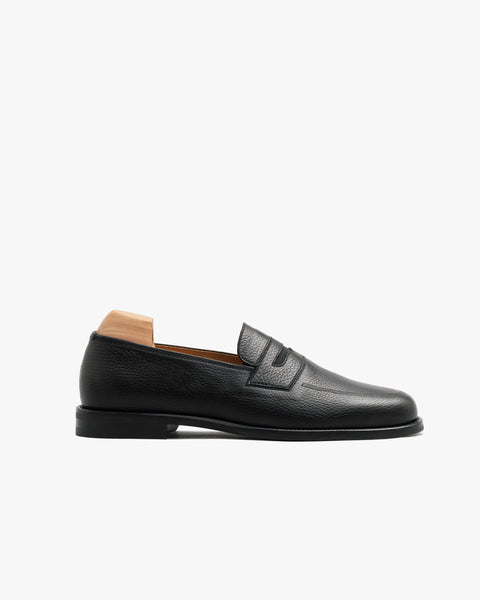
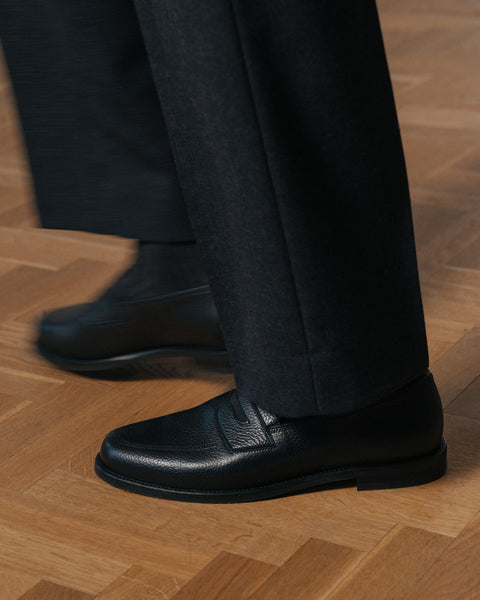
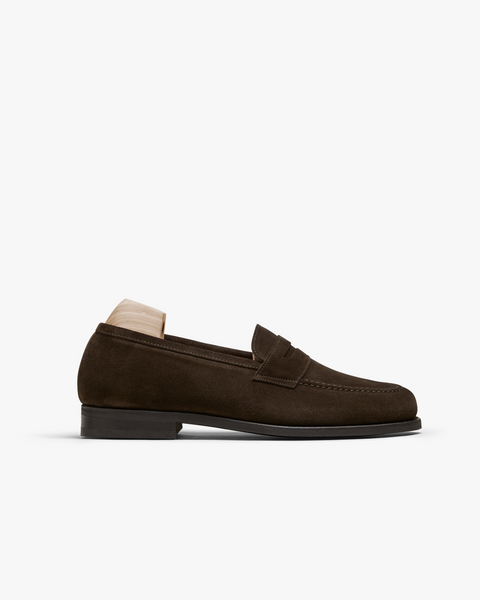
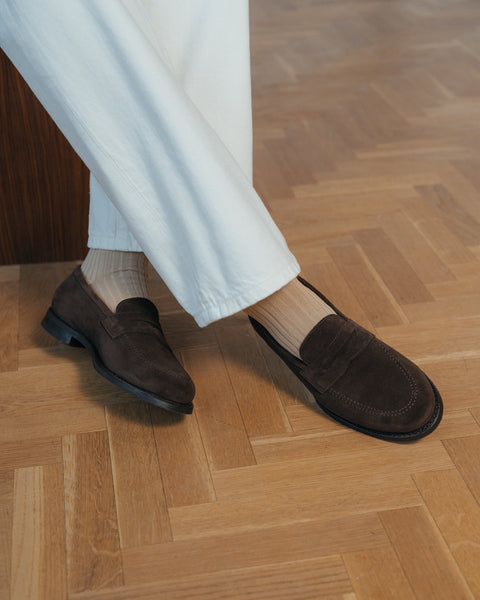


Wedding shoes for men come down to three questions: groom or guest, what the invitation says, and where the day is held. A formal ceremony calls for a dark calf oxford; black tie means a plain black oxford, patent or mirror-shined. A summer or outdoor wedding is exactly where brown suede loafers belong.
Most of the thought that goes into a wedding outfit is spent on the suit, but on the day a surprising share of the attention lands on the shoes. A suit can be hired; the shoes are worth owning. Whatever is on your feet will be in every photograph from the knees down — and if you're the groom, in the ones that get framed.
Three questions do the narrowing — your role, the invitation, the setting — and by the third the field is down to a pair or two.
Groom, or guest?
If you're the groom, buy rather than hire, and buy a pair you'll wear again. Your shoes are in the pictures for the next fifty years, so choose a shoe, not a costume: black or dark brown calf for a formal ceremony, brown calf or suede if the day is outdoors. And wear them in before the wedding — you'll be standing in them from the morning until well past midnight, and you don't want to do that in a brand-new pair.
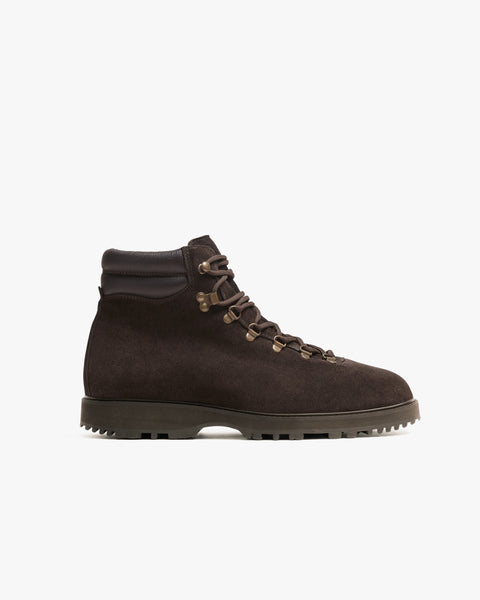
A groomsman simply follows the groom's lead on formality. A guest has an easier brief still: dress one step below the groom, and don't upstage him. The dark shoes you already own, cleaned and properly polished, are almost certainly right. Leave at home anything designed to be noticed — statement soles, novelty finishes, hardware that catches the light in every picture.
Start with the invitation
When the invitation names a dress code, most of the work is done. Black tie is the strictest and the simplest: a plain black oxford, patent or calf polished to a mirror shine, and the list ends there. We've covered that whole subject (pumps, velvet slippers, the patent question) in our guide to what shoes to wear with a tuxedo. Morning dress, the tailcoat convention you'll still meet at British church weddings, takes a plain black oxford too: no broguing, no contrast stitching.
'Lounge suit' and 'cocktail' leave the choice with you. An oxford, derby or monk in black or brown all pass, and the later and grander the event, the darker and plainer we'd go. No dress code at all just moves the question to the venue and the hour: a city hotel and a lawn with a marquee call for different shoes. An evening reception in town means the darker, plainer end of what you own; a two o'clock ceremony with dinner in a garden lets you come down a full step.
Summer gardens and winter churches
The same suit reads differently on a July lawn and in a December church, and the shoes should change with it. Warm weather and open air relax the whole outfit: lighter tones belong here (sand, caramel, warm brown), and so do suede and laceless shoes.
A barn or marquee wedding keeps the suit but adds grass and gravel underfoot. A derby in grained leather, or one with a little brogue detailing, stands up to rough ground better than sleek calf does, and looks right in warm brown.
A destination wedding on a beach or a terrace is the one setting where the rules genuinely relax: loafers in beige and caramel tones are the standard answer there, and a villa ceremony takes a sleek black monk if you want to keep some formality in the picture.
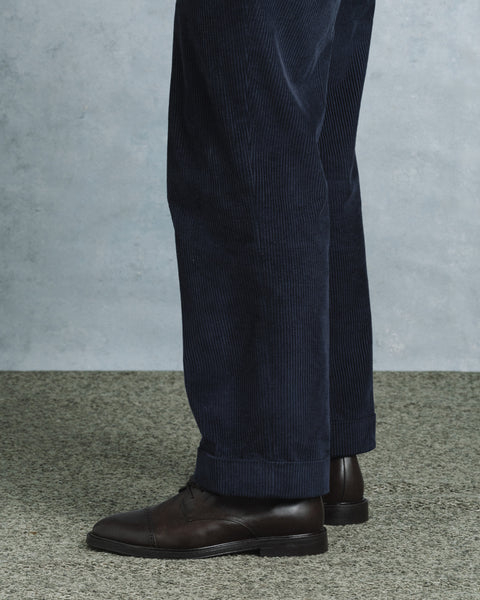
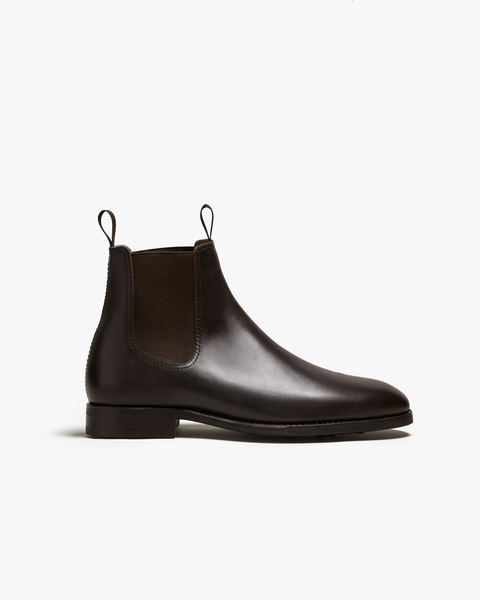
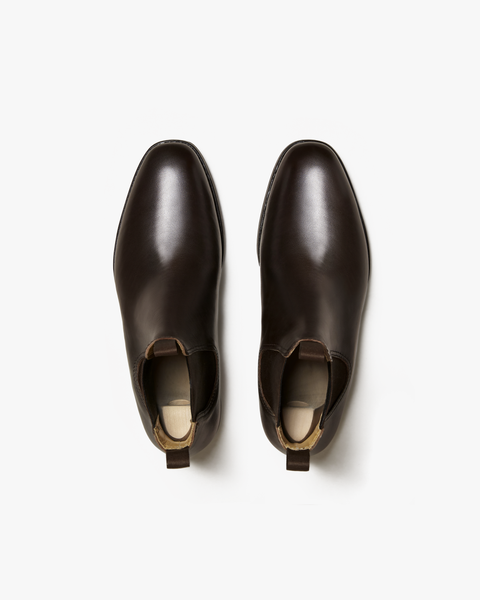
Winter reverses it. Cold-month weddings tend to be indoors and dressed up accordingly — dark calf in black, brown or navy, properly laced, properly polished. Under a heavier suit a sleek Chelsea boot passes too, and it copes with a wet churchyard rather better than a leather-soled oxford.
Black, brown, or something warmer
Black for the strictest codes, brown for almost everything else. Black calf is the answer to morning dress, evening ceremonies and every strict code; patent stays with black tie. With a black suit, wear black. With navy, dark brown or mahogany is the better match. Past those, warmer shades like burgundy and cognac belong at the relaxed end of the day, not the formal one.
Brown is the daytime colour. It suits the open air, it photographs warmer than black against grass and stone, and at everything short of the strictest codes it's the natural choice. The same goes for suede: right in daylight and outdoors, wrong for black tie. How each shade sits against each suit colour is a subject of its own, and our guide to what shoes to wear with a suit covers the whole matching logic.
Four shapes, matched to the day
Four shapes cover every wedding we can think of. Our guide to the types of dress shoes covers what separates them, so here we'll only match each to its day.
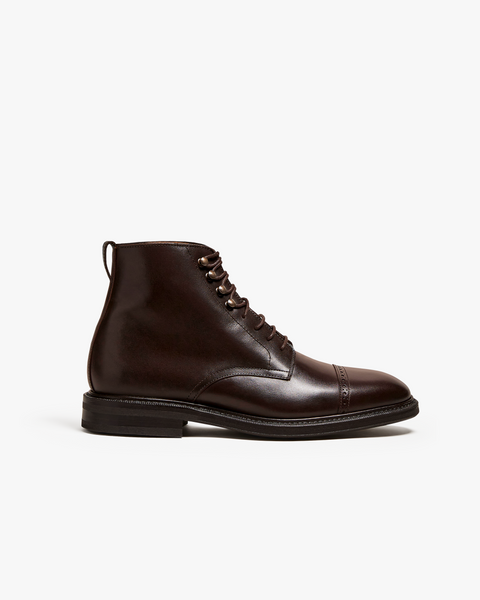
- The oxford — the ceremony shoe. Closed lacing and a sleek profile make it the default for church weddings, morning dress and every evening code: black calf when the code is strict, dark brown with a navy suit in daylight. Ours are in the oxfords collection.
- The derby — the outdoor formal. Open lacing and a little more room, and in grained leather the right shoe for marquees, farm courtyards and gravel drives.
- The monk — the stately-home shoe. A buckle instead of laces, at its best at a garden-formal wedding.
- The loafer — the warm-weather pick, and the strongest case in the guide. It gets the next section.
The case for a loafer
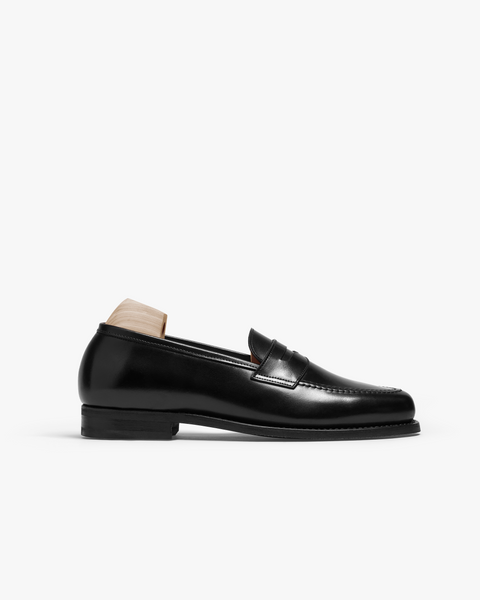
Brown suede loafers belong at a summer wedding. Not as a fallback, not with a line of apology — on a warm day in the open air they're the correct shoe, and to our eye the best-dressed one there.
The case is practical before it's aesthetic. A summer ceremony means heat, grass and a long day standing, and a laceless shoe in soft suede carries that better than stiff laced calf — you'll notice the difference somewhere between the speeches and the dancing. It's also the pair you'll wear most afterwards, with chinos in June and flannels in October, which is more than can be said for patent.
Penny or tassel is a question of taste rather than correctness; both work under a summer suit, and a Belgian slip-on reads a shade more relaxed than either. Keep the sole leather and the lines clean, and the shoe is dressed enough for any summer wedding.
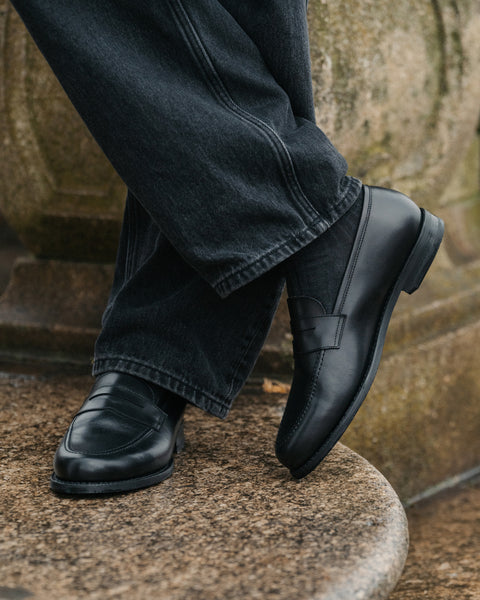
Wear them sockless (a no-show sock, in practice) or with proper full-length socks near the trouser's colour; the visible ankle sock is the one wrong answer. We've written the styling guide to how to wear loafers and a separate one on going without socks, and our own loafers (penny, tassel and Belgian among them) run from black calf to exactly the dark brown suede we've been arguing for.
The pairs we'd wear to a wedding
View all


If you're still torn, two pairs cover nearly everything: a well-polished dark calf oxford for anything formal or unstated, and the brown suede loafer once the day moves outdoors.
Three more questions
What shoes should the groom wear?
The pair that photographs well and gets worn again: black or dark brown calf oxfords for a formal ceremony, brown calf or suede — a loafer included — for a daytime or outdoor one. Buy rather than hire, and wear the shoes in before the day.
Can you wear loafers to a wedding?
Yes. At daytime, summer and relaxed weddings a polished or suede loafer is a correct choice, not a shortcut — keep the colour dark or warm rather than loud, and wear it sockless or with full-length socks. For black tie and morning dress, stay with the laced oxford.
Can you wear white shoes to a wedding?
For men it's barely a live question — keep your shoes darker than your suit and it never comes up; the worry belongs almost entirely to women's wedding-guest dressing.


