

Loafers are the shoe you stop thinking about once they're on. Wear them sockless through the warm months and with a proper full-length sock, never a low one, the rest of the year; start with a brown penny, the one pair that goes with almost everything; and size down about half a size so the heel holds. The rest is mostly knowing which pair suits which trousers.
A loafer is a shoe with nothing to fasten. With no laces, nothing holds the shoe on except the fit — so a loafer has to fit more snugly than you're used to. And with no laces to look at, the details do the talking: the strap or the tassels, the colour and the leather are what make one pair casual and another dressy enough for a suit.
Penny, tassel, horsebit — and unlined
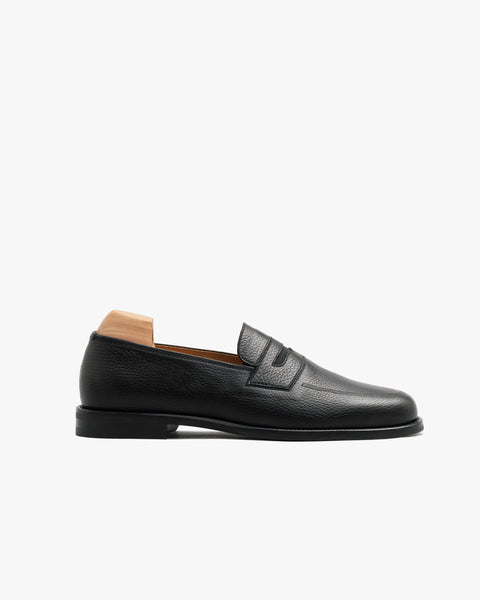
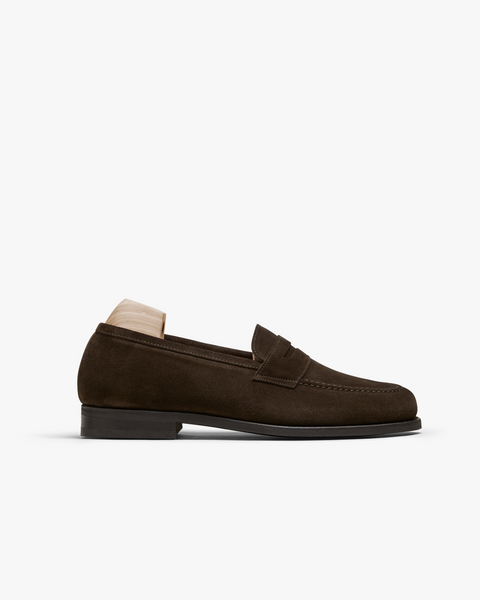
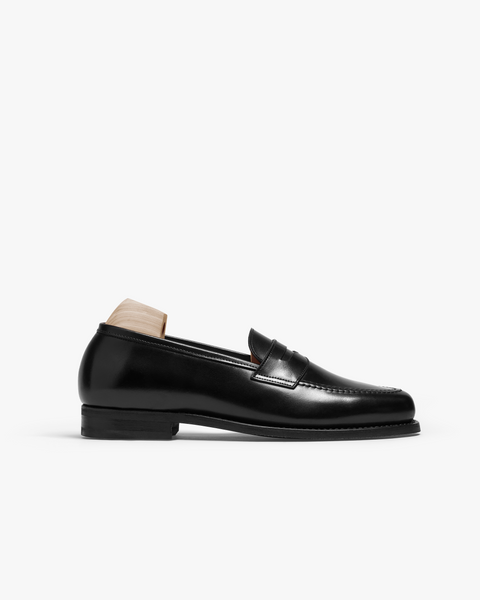
Nearly every loafer you'll meet goes by one of four names. A penny loafer has a slotted leather strap across the vamp, named for the mid-century habit of tucking a coin into the slot. A tassel loafer swaps the strap for a pair of tassels and reads a touch dressier. A horsebit loafer carries a metal snaffle across the front, the sleekest and most modern of the three. The fourth isn't a shape but a construction: an unlined loafer is built with little or no inner lining, so it sits softer and cooler against a bare foot.
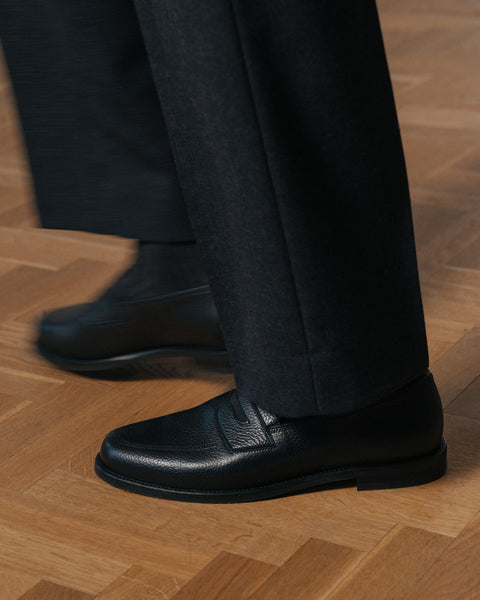
Because the details set the formality, those names also form a rough ladder, and if you're buying your first pair, buy a penny. It's the most versatile of the family, as at home under tailoring as with rolled-up jeans, and the menswear forums are near-unanimous on the point. Start in brown, too: a mid or dark brown works with navy, beige, green and denim, where black is narrower and belongs with grey and black tailoring. The pair we'd hand a first-time buyer is Stenhammar II, our penny in dark brown suede. A tassel makes a natural second pair, a horsebit a third.
Suede or calf
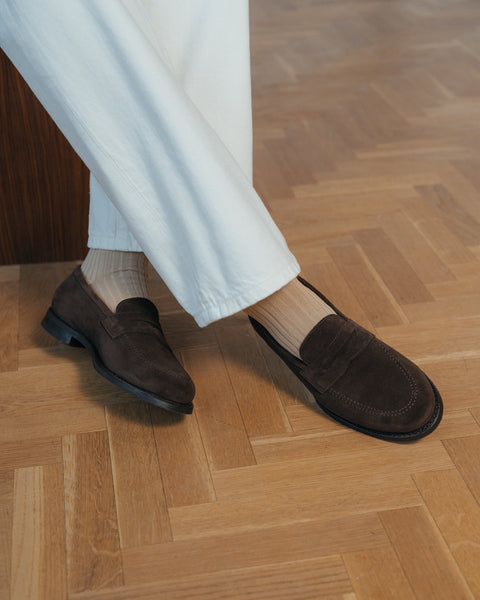
The other half of choosing is the leather. Suede is the more breathable and forgiving of the two, warmer in tone, and the natural pick for warm weather and bare ankles; all it needs is a regular brush to keep the nap even. Calf is hardier and cleaner-looking, the better choice in poor weather and the dressier of the two. The rough rule: suede for relaxed-smart days, calf when you want the crisper line. If you go suede, our guide to caring for suede shoes covers everything from a muddy walk to a set-in stain.
How they should fit
Fit matters more here than on any other shoe you own, because it's all that holds the shoe on. Take about half a size down from your usual lace-up size, and let the heel settle in. That's the short version; the full picture, from heel slip in a new pair to breaking them in to whether they suit wider feet, is in how loafers should fit.
With jeans, chinos and shorts
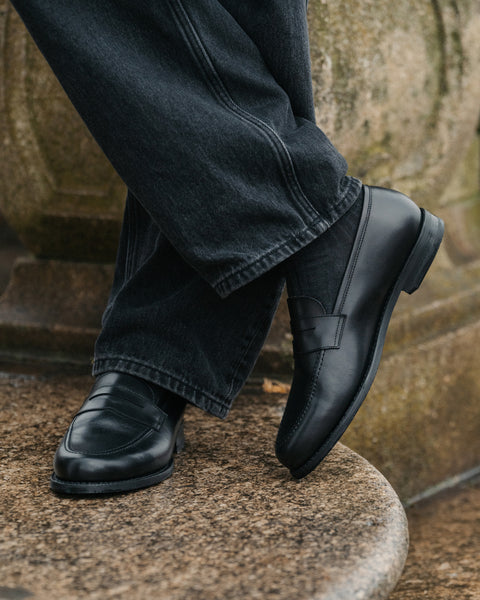
Wearing them comes down to where your trousers stop. With jeans, a slim or straight leg with the hem ending just at the ankle keeps the shoe in view; penny and tassel styles both suit denim well. With chinos, crop the hem just above the shoe for a clean line. Shorts are where sockless makes the most sense, and suede looks easiest.
Most of the worry here is misplaced. Loafers with jeans aren't tacky as long as the formality matches: casual suede with relaxed denim, a sleeker pair when the jeans are dark and fitted. And tassel loafers with jeans, the divisive pairing, work well when you keep them deliberate — a soft suede tassel with dark, slim jeans looks right. The wider rule is the one from the start: the sleeker and darker the loafer, the dressier it goes.
Bare ankles
In warm weather, sockless is the natural way to wear a slip-on, and it's a casual look rather than a tailored one. Whether to wear a no-show liner rather than go truly bare, how to keep a sockless shoe fresh, and where the bare-ankle habit comes from — our companion guide to wearing loafers without socks covers all of it.
Under a suit
At the dressy end, a loafer under a suit used to raise eyebrows and now barely registers. Loafers work well with sport coats, odd trousers and softer business suits; only a strictly formal office still calls for lace-ups. Choose a clean, dark style — a black or dark-brown penny or tassel, or a horsebit, the dressiest of the three but still short of black tie.
Match your belt to the leather of the shoe, brown with brown and black with black. And with tailoring, wear socks: a fine, full-length pair in a tone close to your trousers, never a low sock that leaves a band of ankle showing. Black tie is a different question again, and our guide to tuxedo and black-tie shoes covers it.
Built to be kept
One thing left before you spend: construction. It's the difference between a shoe a cobbler can rebuild and one you replace. Most of our loafers are Goodyear-welted — structured, hard-wearing and straightforward for any cobbler to resole. The exception is Lysekil II, our unlined pair: it's Blake-stitched, which is slimmer and lighter, part of why it wears so well in summer, and it resoles too, at a cobbler set up for Blake work. Neither method is better; both are built to be looked after. If you want the detail of how a welt works and why it matters, we've written up what a Goodyear welt actually is.
After that, there's not much to do: let each pair dry out fully before you wear it again, and keep cedar shoe trees in them in the meantime. For smooth calf, our guide to caring for leather shoes covers cream, polish and shine.
Where to start
View all


A few more
Why are they called loafers?
The name is exactly what it sounds like: a shoe for loafing. The style was popularised in the 1930s as easy, unhurried footwear, and the term stuck. The “penny” in penny loafer comes later, from the mid-century habit of slipping a coin into the strap's slot.
Can you wear loafers in winter?
Yes, with socks and the right pair. Reach for calf over suede in wet weather, keep to a fine full-length dress sock in a tone close to your trousers, and save the bare-ankle look for warmer months.
Can you wear loafers to a wedding?
For most weddings, a sleek dark penny or a horsebit is well within bounds, especially with a softer suit. The exception is black tie, where a classic loafer is too casual — see the tuxedo and black-tie guide for what works instead.


