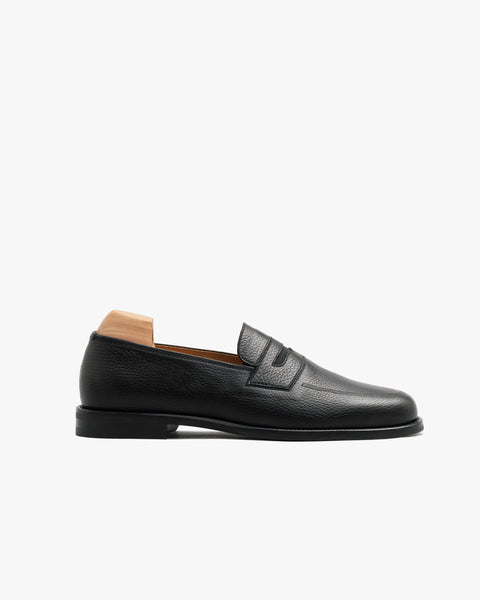
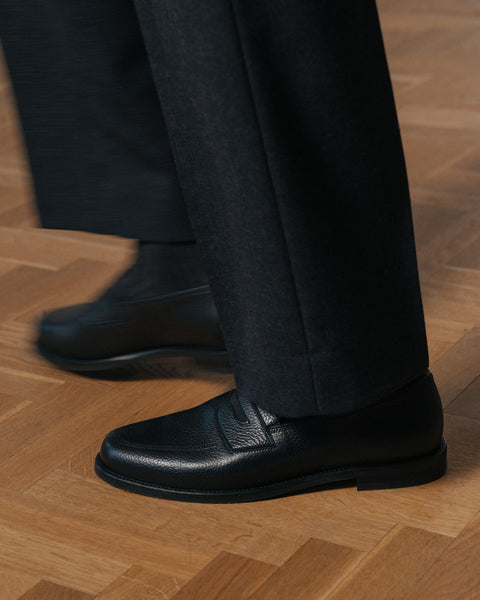
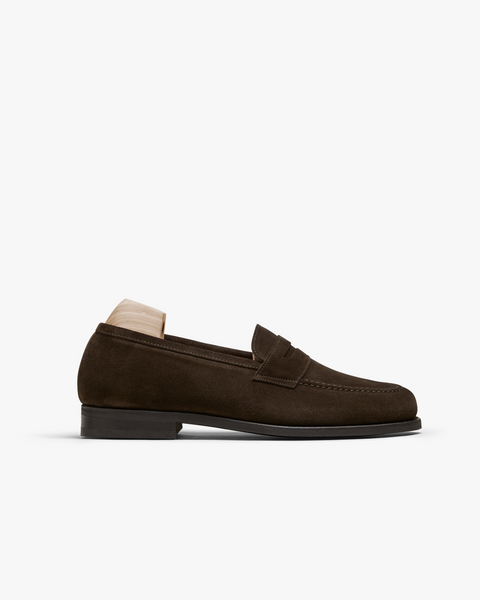
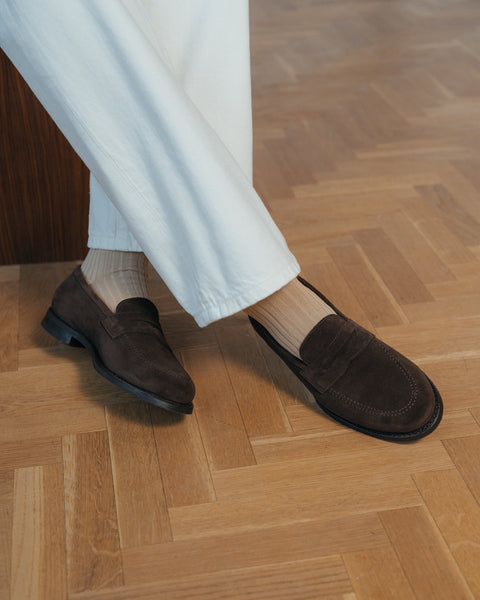

Neither is better — they're built for different jobs. A Blake stitch sews the sole straight through the insole for a lighter, slimmer, more flexible shoe; a Goodyear welt stitches it to a separate strip, which sheds water better and is the easiest to resole. Cemented (glued) is lighter and cheaper, and effectively can't be resoled.
Somewhere on the product page of most dress shoes, below the leather and the last, a line names how the sole is attached. It reads like a technicality, and it's the single most useful line on the page: it sets the shoe's weight, its weather, and whether the pair has a second life once the sole wears through.
Most comparisons treat the constructions as a ranking, with the Goodyear welt on top and glue at the bottom. We can't, honestly: we make Goodyear-welted shoes, Blake-stitched shoes and cemented shoes, and each construction was chosen on purpose, model by model. The useful question isn't which is best. It's which one matches the shoe you're buying and how you'll wear it.
Three ways a sole meets an upper
A Blake-stitched shoe is sewn straight through: one line of stitching runs through the outsole, the upper and the insole in a single pass, and that seam holds the whole shoe together. A Goodyear-welted shoe puts a strip of leather, the welt, between the two — the upper is stitched to the welt, and the outsole is stitched to the welt in turn, never to the shoe itself. A cemented shoe skips thread altogether and bonds the outsole to the upper with adhesive.
That's the theory in three sentences, and on paper the differences look small. On your feet, in the rain and at the cobbler's, they aren't. (If insole, outsole and upper are unfamiliar words, our guide to the anatomy of a dress shoe names all the parts. Sneakers are a subject of their own; this guide is about dress shoes.)
The Blake stitch
The single seam is the whole idea. With no welt, there's nothing to trim wide at the edge, so the sole can be cut close to the upper — and everything that makes Blake worth choosing follows. The shoe sits slimmer and lower to the ground, weighs less, and flexes almost from the first wear. One seam instead of two also means less material and less labour, which is why Blake-stitched shoes usually cost less than welted ones.
The trade-offs sit in the same place as the appeal. That single seam runs under your foot, and the stitch holes pass through to the insole, so the shoe lets in more water than a welted sole would. And while it can be resoled — the old seam is cut and a new sole is stitched on the same way — the work needs a Blake machine, and fewer cobblers keep one, so the repair can take some finding.
That mix — sleek, light, best kept out of the rain — describes an evening shoe almost exactly, which is why our patent evening shoes, Vinterviken II, Drottningholm and Rosendal, are all Blake-stitched. A shoe worn indoors a few nights a year doesn't need to keep rain out; it needs a slim sole that disappears under a tuxedo trouser. (Which shoe goes with a tuxedo is its own guide.) The same thinking runs through several of our loafers and lighter boots.
The Goodyear welt, in short
The Goodyear welt gets a short section here because it has a full guide of its own. The construction in brief: a strip of leather runs around the shoe, stitched to the upper, and the outsole is stitched to that strip rather than to the shoe itself. Because the main seam sits out at the edge, a welted shoe sheds water better than the other two; and because the sole hangs off the welt, any competent cobbler can cut it away and stitch on a fresh one, over and over.
The costs are what you'd expect: more material and more labour, so a higher price, and more structure, so a firmer shoe with a real break-in while the cork bed under the insole moulds to your foot. How it's all put together — the two seams, the cork filling, how to spot a faux welt — is in our guide to the Goodyear welt.
The case for cemented
Cemented construction usually gets one sentence in comparisons like this, and rarely a kind one. We'll give it more, since we make cemented shoes by choice. The build is what the name says: the outsole is bonded to the upper with adhesive, and no stitching passes through anything. That makes it the lightest, most flexible and least expensive construction of the three — no welt to sew, no seam to run.
The limit is the sole. With no seam to cut and re-run, a cemented shoe effectively can't be resoled: when the sole wears through, that's the end of the pair. There's no talking around that, and we won't. But it's a different value proposition rather than a lesser product. You pay less up front for a lighter shoe, and you give up a rebuild that plenty of wearers never use anyway.
That's the trade our cemented styles are built on: several of our loafers, along with our sandals — light shoes for fair weather, which is exactly where cemented makes sense.
Which one is right for you
Side by side, the differences sort into five rows.
- Weight and flex — cemented is the lightest and most flexible, Blake close behind it, and the Goodyear welt the heaviest and most structured of the three.
- Weather — the welt is the most water-resistant, because its seam sits out at the edge; Blake lets in more, because its stitching runs under the foot. None of them makes a shoe waterproof.
- Resoling — a welted shoe can be resoled by any cobbler with a bench, many times over. A Blake-stitched shoe can be resoled too, with the machine caveat above. A cemented sole is glued for life — no seam, no resole.
- Break-in — Blake and cemented shoes are close to ready out of the box. A welted shoe starts firm and needs breaking in while the cork bed takes the shape of your foot.
- Price — more seams mean more work: welted costs the most to buy, Blake sits in the middle, cemented the least. Count resoles in and the order can turn around — a pair that takes new soles costs less per wear the longer you keep it.
Read as advice rather than a chart: for daily wear in all weathers, in a pair you mean to keep for years, buy welted. For the city, for drier days, or for evening dress where the profile matters most, buy Blake. For a light shoe in the warm months, or simply to spend less and wear them out, cemented is nothing to apologise for. And if you're in a shop trying to tell one from another, the answer's in the questions at the end.
What we make, and why
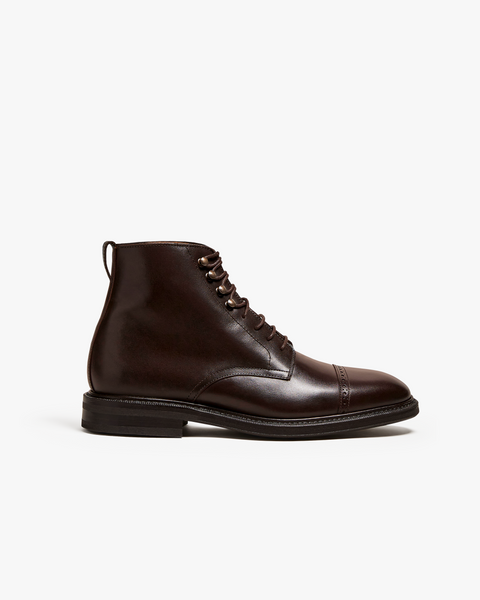
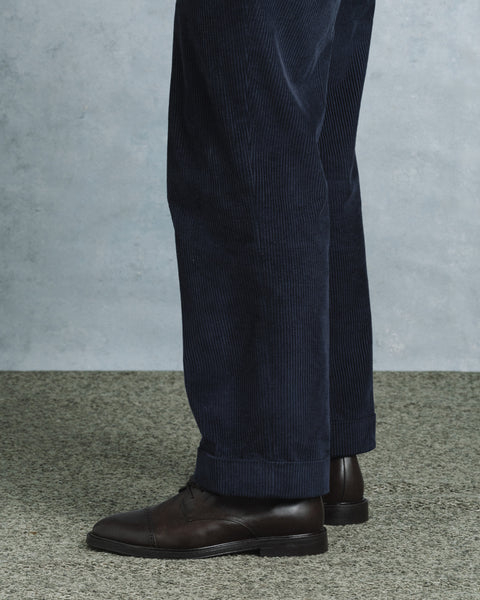
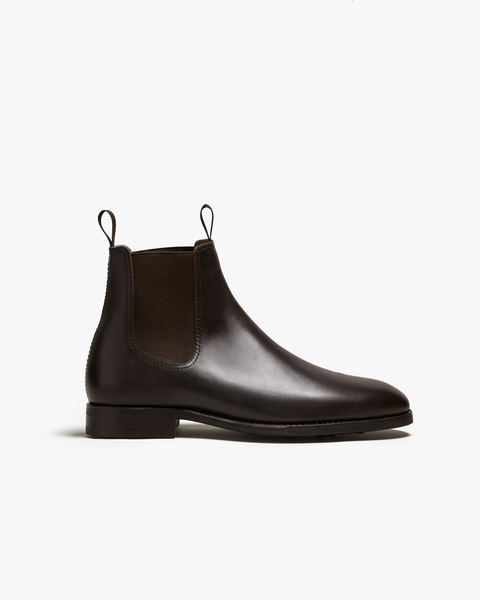
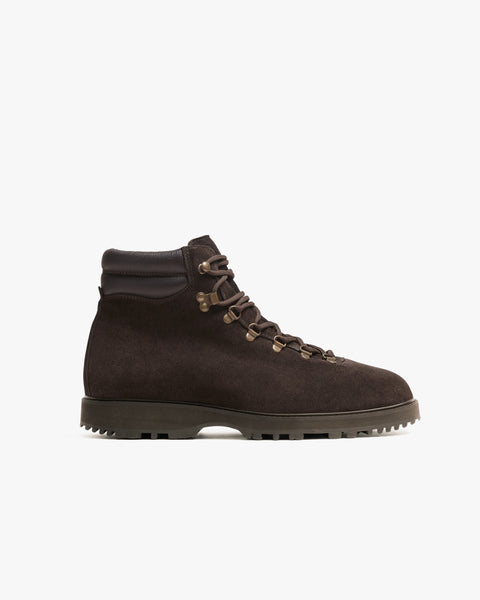
Shop welted shoesOur range runs on all three, and the split follows the logic above rather than a price ladder. Every tassel loafer, horsebit loafer and chukka boot we sell is Goodyear-welted, and so are most of our oxfords and derbies — the shoes likeliest to be worn hard, in weather, for years. Blake builds our patent evening shoes and several of our loafers and lighter boots, where a slim profile is the point. Cemented builds light styles, our summer loafers and sandals among them.
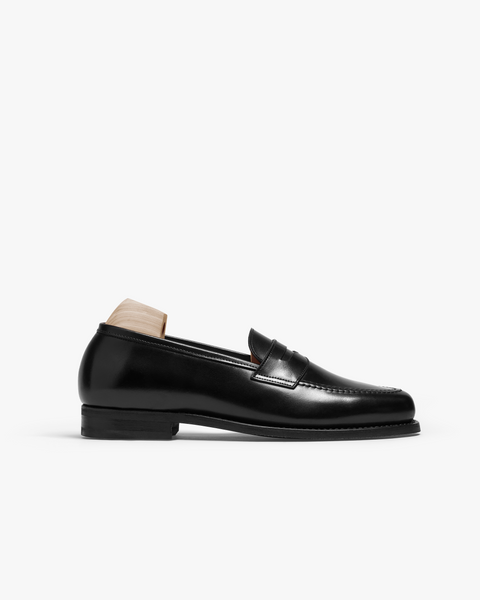
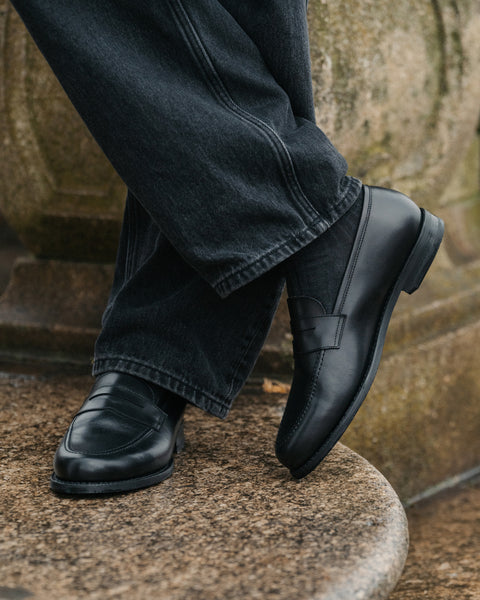
The clearest proof is three loafers. Stenhammar II is Goodyear-welted, Smögen is Blake-stitched and Brännö II is cemented — one family of shoe, built three ways, because each is meant for different wear. One of each is below, and the welted range is in one place.
One of each construction
View all


Whichever way you go, the construction is a promise the leather has to keep — the routine that keeps it able to is in our guide to cleaning leather shoes. Past that, buy for the wear you'll give the shoe, and the right construction follows.
A few short answers
How do you tell Blake stitch from Goodyear welt at a glance?
Look at the edge, then look inside. A Goodyear-welted shoe shows a strip of leather running around the base with a stitch line along it. A Blake-stitched shoe has no welt and a close-trimmed edge, and the giveaway sits inside: a line of stitching running around the insole. A cemented shoe shows neither — no welt, no stitching, just a clean glued edge.
Can Blake-stitched shoes be resoled?
Yes. The old seam is cut and a new sole is stitched on the same way, but the job needs a Blake machine, and fewer cobblers keep one, so it's worth asking before you hand a pair over. A Goodyear-welted shoe is the easier resole — the repair any high-street cobbler can do; a cemented shoe has no seam to re-run, so the first sole is the only one.
Is Blake stitch more comfortable?
Out of the box, usually. A Blake-stitched shoe flexes sooner and sits slimmer, with less material underfoot. A Goodyear-welted shoe starts firmer, but the cork bed under the insole takes the shape of your foot over the first weeks, and a broken-in welted pair gives more support. They're two kinds of comfortable rather than a winner and a loser.
Are cemented shoes worth buying?
Yes, for the right use. You get the lightest, most flexible and least expensive build, and you give up the resole — once the sole is worn through, the pair is done. For a summer loafer or an easy casual shoe, that's often a fair trade. For a daily pair you plan to keep for a decade, stitched construction is the better buy.


