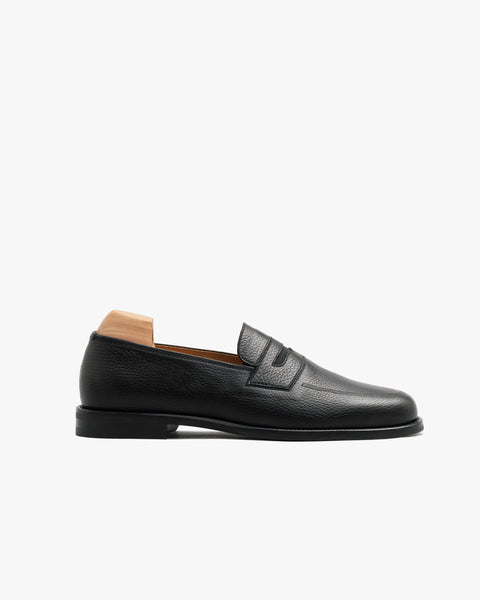
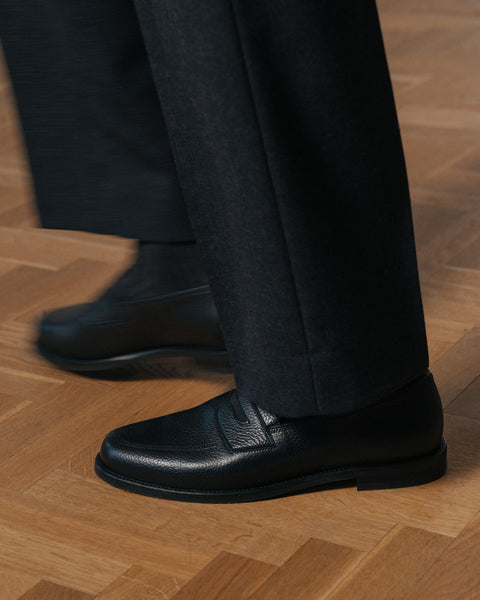
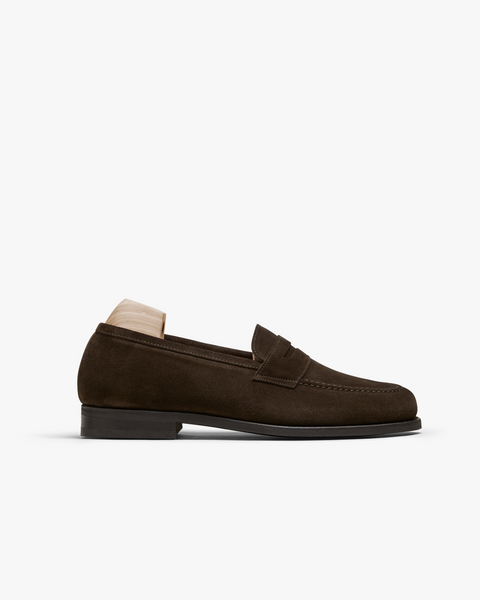
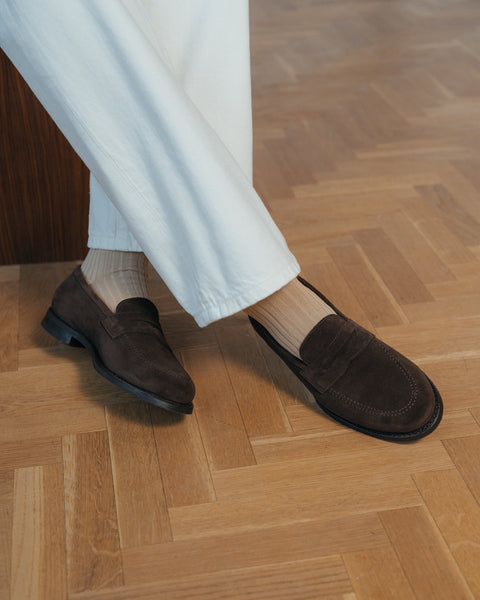
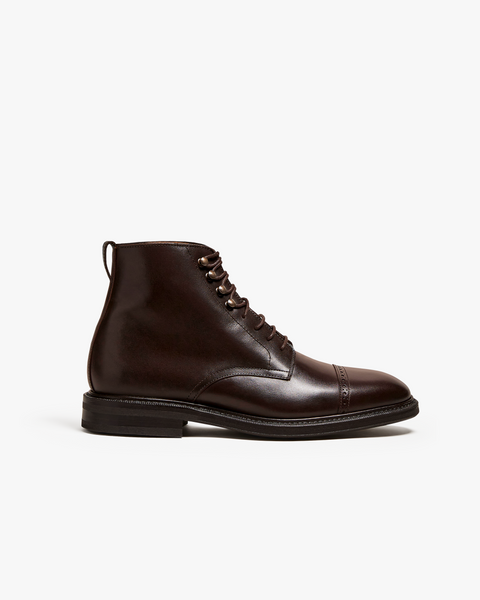
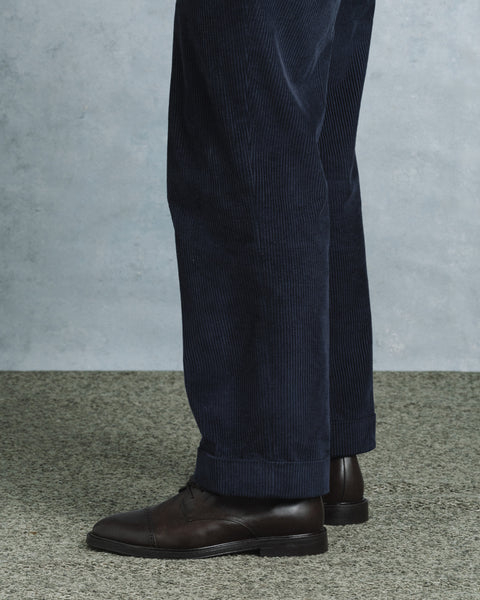
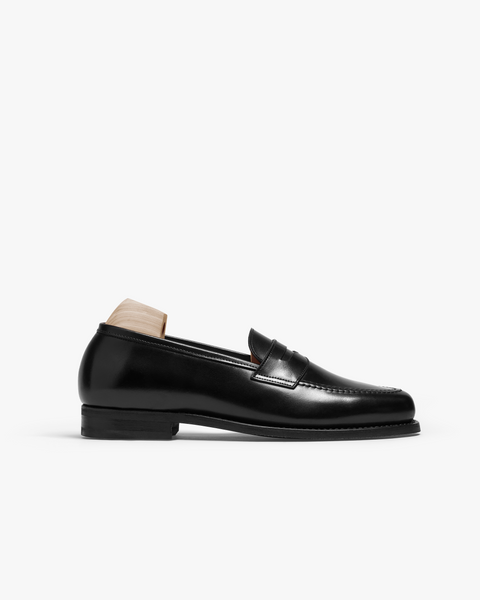
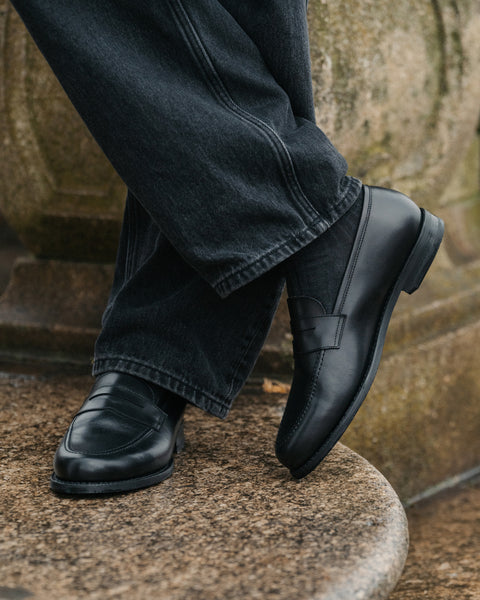
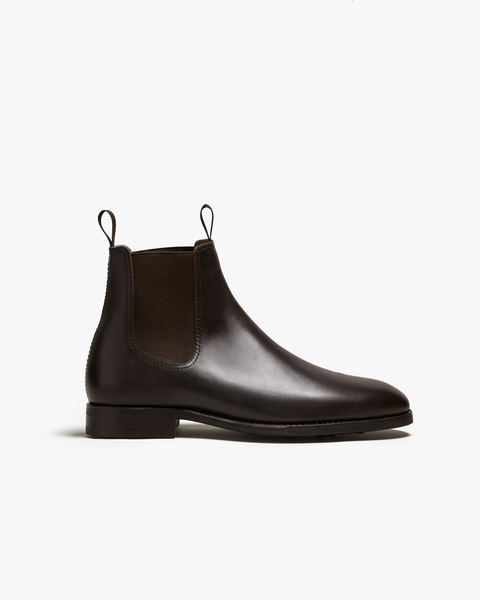
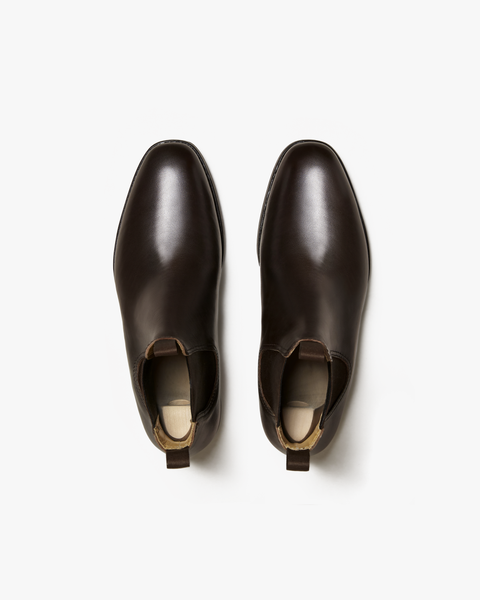
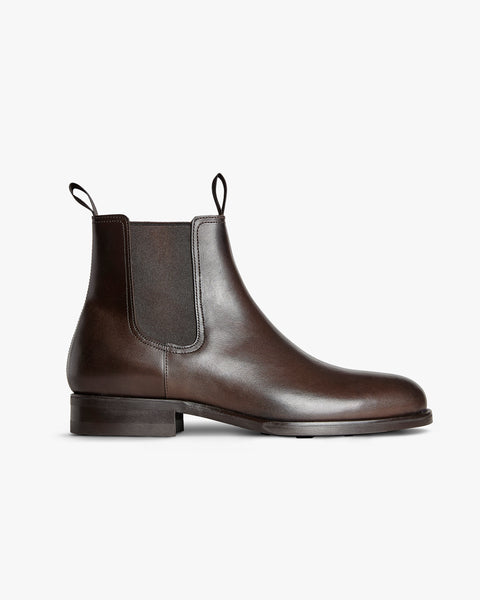
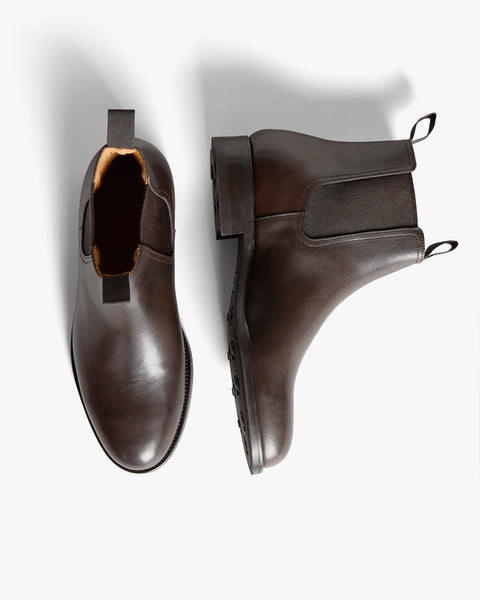


A Goodyear welt is a strip of leather stitched to the shoe's upper and to a rib on the insole; the outsole is then stitched to that welt rather than to the upper itself. Because the sole hangs off the welt and never touches the upper, a cobbler can cut it away and stitch on a fresh one without opening up the shoe. That's why welted shoes can be resoled again and again and last for decades. They shed water better than a glued sole too, in exchange for a little more weight and a firmer week or two of breaking in.
If you've spent any time shopping for proper leather shoes, you've already run into the term. It's on the product pages, it's part of the price, and every buying guide tells you to insist on it. The term itself names one decision: how the sole is attached.
That decision explains nearly everything else about these shoes — why they can be resoled for decades, why they cost more to buy and less to own, why the first two weeks feel stiff, and why the label on its own doesn't guarantee a good pair.
How a welt works
Look at the edge of a welted shoe and you can see most of the idea from the outside. A strip of leather (occasionally rubber) runs around the base, stitched to the upper on one side and to a rib under the insole on the other. The outsole is stitched to that strip, the welt, and never to the shoe directly. So the sole hangs off the welt, and when it wears out, a cobbler can cut it away and sew on a new one without disturbing the shoe above it.
That separation is what you're paying for. It's why a welted pair can be resoled over and over, which is the difference between shoes that last decades and shoes that last seasons. It's also why they keep water out better than a glued pair: the seam that holds everything together sits out at the edge, not punched through the insole under your foot.
The build takes two separate seams. First the upper is stretched over the insole and held in shape — lasted, in the trade. Then the welt is sewn through the upper and the rib on the underside of the insole; on a machine-welted shoe that rib is a glued canvas strip called gemming. This first seam, the inseam, locks the upper, the lining and the insole into one piece.
The stitching leaves a hollow under the foot, and it's filled with ground cork. The cork compresses over the first weeks of wear and moulds to the shape of your foot, which is why an old pair feels like yours. The second seam, the outseam, runs around the outside edge and holds the outsole to the welt. The inseam holds the shoe together, the outseam holds the sole on, and the outseam is the only one a cobbler ever needs to touch. If the part names are new to you, our anatomy of a dress shoe guide labels every one.
Watch: how a welted shoe is made
Getting it resoled
A well-kept welted pair takes somewhere between five and ten resoles before it retires, and any competent cobbler can do the work. In daily rotation that means a resole every two to five years. Each time, the cobbler cuts the outseam, lifts the worn sole away and stitches a fresh one onto the same welt; the upper, the insole and the welt aren't touched. Even at the top of that range, it's rarely the construction that gives out first — the real limit is the upper leather.
Book the resole before the sole actually wears through. Once a hole opens, water and grit get into the cork, the welt and the leather insole, and a routine sole swap turns into a slower, more expensive rebuild.
On cost, there are two levels of the job. A local cobbler swaps the outsole and heel, which is all most pairs need. A factory recraft goes further and costs more: a new outsole, a fresh cork bed and heel, the shoe rebuilt on its original last so it comes back close to new. A cobbler resole costs a fraction of a recraft, and a recraft a fraction of a new pair. (Those are third-party cobbler and factory figures, not our prices.)
The honest caveat is that the sums only work if the shoe was worth keeping in the first place. A genuinely good pair (full-grain upper, sound construction) is worth resoling many times over: it costs less per wear than cheaper shoes replaced every couple of seasons. A cheap welted shoe on a thin corrected-grain upper can cost as much to resole as it's worth, and you're better off letting it go.
Welt, Blake, or glued
Nearly everything at this level is built one of three ways, and the differences all come back to the same question: what is the sole attached to, and can you get it off again? A welted shoe has the sole stitched to the welt — resoleable anywhere, by any cobbler, and the most water-resistant of the three. A Blake-stitched shoe has the sole stitched straight through the insole: lighter, more flexible and sleeker, though a resole needs a Blake machine and a little more water gets in. A cemented shoe is glued — the cheapest way to build, but the bond ages and there's no clean way to resole it. The full three-way decision is in our Blake stitch vs Goodyear welt guide.
There's also hand-welting: the same construction as the first, sewn entirely by hand rather than by machine, and the version purists rank highest (more on it in the questions at the end). Most makers use more than one of these methods, and so do we — our range uses all three: welted at its core, Blake and cemented where lightness is the point.
What the welt doesn't tell you
The label guarantees less than the marketing around it suggests. The welt is one component in a shoe of roughly ten — call it ten per cent of what you're paying for. A pair can be properly welted and still be cut from thin corrected-grain leather, built on a badly shaped last and stitched in a hurry, and it'll let you down no matter what's holding the sole on.
Everything else settles the question: a full-grain upper that will outlive a decade of resoles, a properly tanned sole, a last that fits and keeps its shape, and clean, even finishing inside and out. Enthusiasts raise one fair objection about the construction itself, too. On a machine-welted shoe the insole rib is glued on, and that gemming can loosen or crack over a very long life, which is why purists hold out for hand-welting, where the rib is carved from the insole itself and nothing is glued. You can't inspect gemming (it sits hidden inside the shoe), so you're trusting the maker's reputation and how plainly they describe what they build. The usual counter is that well-bonded gemming outlasts most shoes anyway, which is true, and also something you take on trust.
None of this makes a machine-welted shoe a bad shoe. It makes the label a starting point rather than a verdict. Our own approach is to name the construction plainly and let the rest of the specification stand next to it. When you weigh up a welted pair, look past the welt: at the grain of the upper, the fit of the last, the neatness of the stitching, and how openly the maker tells you what the shoe actually is.
Telling a real welt from a fake
The check takes about five seconds. A real welt shows stitching on the outside edge of the sole and none inside the shoe: the outseam stops at the welt, so the insole under your foot stays smooth and unbroken. If you find a line of stitches running around the inside, you're holding a Blake-stitched shoe, not a welted one.
Then look at the stitching itself. On a real welt the stitches sit dense and even along the strip, and they match a proper seam on the sole. Thread that starts and stops in odd places, or sits slack and decorative, is a bad sign. The worst case has a name — a bonwelt, or faux welt: a strip glued onto a Blake or cemented shoe, with a row of stitches that connects to nothing, put there to look like a welt and charge welted money. And one honest trap: the visible seam on the sole edge is the sole seam (sometimes called the rapid seam), and on its own it proves nothing about what's underneath. Check the outside and the inside together.
Break-in and everyday care
A new welted pair feels stiff, and it's meant to. The usual complaint, that the soles are too hard, is almost always a shoe that isn't broken in yet. Give it one to four weeks of ordinary wear: the thick leather softens, the cork bed compresses and takes the print of your foot, and the pair that felt like a plank starts to feel made for you. Start with short outings rather than a full day on day one.
After that, the habits that carry a pair through decades are dull and effective. Don't wear the same pair two days running. Stand them on cedar shoe trees while they rest: the cork and lining are damp after a day's wear, and cedar draws that out while keeping the shape. Keep the leather fed and the seams sealed with regular conditioning — our guide to caring for leather shoes covers the routine. If you buy with wet weather in mind, look for a storm welt, a wider welt turned up against the upper like a low wall, which keeps out water, mud and snow far better than a flat one at the cost of a chunkier look. And, as noted earlier, resole before the sole wears through.
How we build ours
Shop all shoesMost of what we make is welted and handcrafted in Portugal, which is another way of saying it's built to be resoled and kept. The welt isn't the whole story of any of our shoes, but it's the part that makes the rest worth looking after.
The Oxford the brand started with is now in its second edition, the cap-toe Äppelviken II, and the Granhult carries the same construction into a Chelsea boot. You'll find both in the full range, built to go back to a cobbler when the first sole wears thin.
Welted and made in Portugal
View all

A few more questions
Are Goodyear-welted shoes waterproof?
Water-resistant, yes; waterproof, no. The main seam sits outside the shoe and the insole is left largely unpunctured, so a welt sheds rain far better than a glued sole ever will. For heavy weather you still want a storm welt underneath, and a regular coat of wax or a protector spray on top.
What is Blake Rapid construction?
Blake Rapid adds a midsole for the outsole to stitch into, which makes it sturdier and easier to resole than plain Blake while keeping much of the flexibility. It sits between Blake and a full Goodyear welt on both toughness and weight.
What is hand-welting, and how is it different from Goodyear?
Hand-welting sews the welt to a holdfast carved from a thicker insole, with no glued rib anywhere in it. The repairable principle is identical to a Goodyear welt; the difference is that a hand does the work a machine would otherwise do. It's the version purists prize, and the benchmark machine-welted shoes are measured against.
Who invented the Goodyear welt?
The welting machine was invented in 1862 and refined from 1869 by makers working for Charles Goodyear Jr, son of the rubber pioneer Charles Goodyear, and it took his name. The welt itself is far older than the machine — shoes had been hand-welted since around 1500, three and a half centuries before anyone mechanised it.


