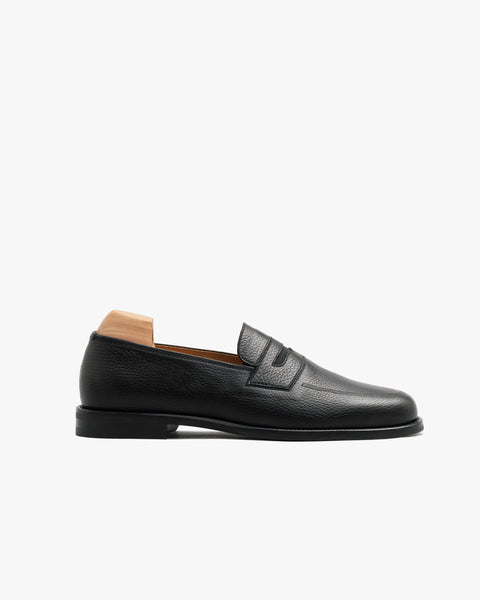
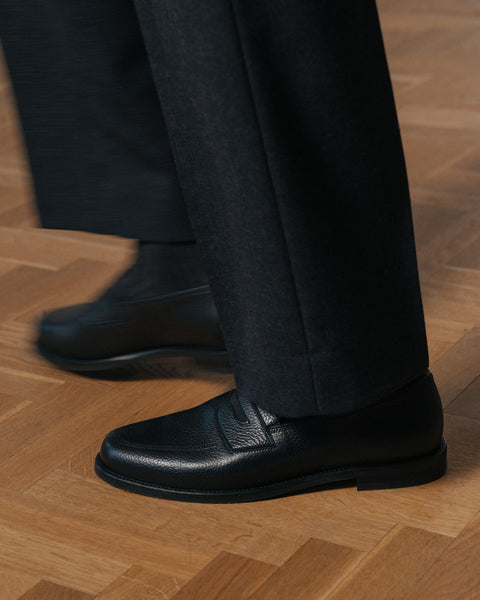
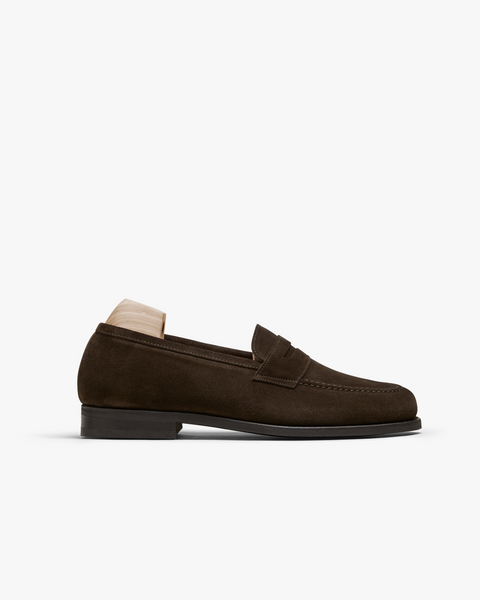
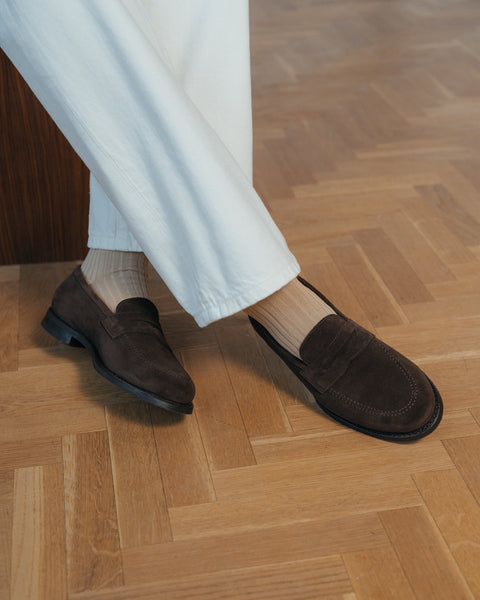


Yes, you can wear loafers without socks, and in warm weather it's the natural way to wear them — with shorts, jeans and chinos, rarely with a jacket, never with a tie. Most people wear a thin no-show liner rather than a truly bare foot, which keeps sweat out of the leather. The one thing to get right is dryness: rotate pairs, tree them with cedar between wears, and a sockless loafer stays fresh for years.
Once the weather warms up, loafers get worn with shorts and lighter trousers, and socks start to look like the odd part of the outfit. The look itself isn't in doubt — a bare ankle over a suede penny is about as settled as casual dressing gets. What people actually worry about is the shoe: whether a bare foot ruins the lining, and whether the pair will smell by the end of the summer.
Both worries have the same answer. Everything that goes wrong with sockless wear is moisture, and everything that keeps it right is keeping the shoe dry.
When to go bare, and when to keep socks on
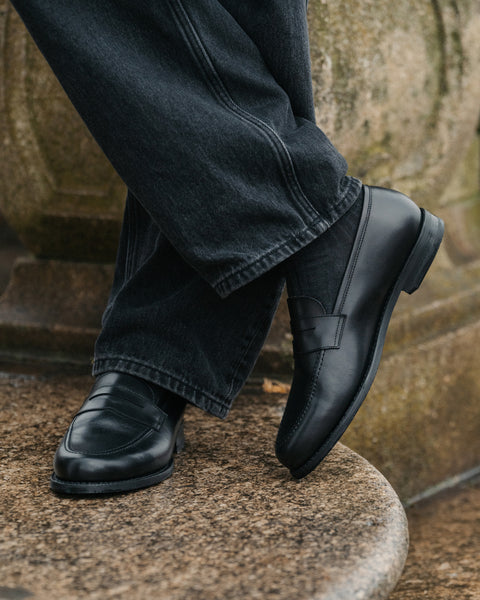
Bare ankles look right with shorts, jeans and chinos, and with a lightweight suede especially. The habit has real pedigree: it goes back to the mid-century driving moccasin — Gianni Agnelli's Italian version, and the J.M. Weston pairs worn sockless in 1960s Paris. The etiquette most wearers settle on is short: freely on casual days, rarely under a jacket, never with a tie.
Socks stay on in the other direction. A business suit wants a fine, full-length dress sock, tonal to the trousers, and anything formal wants proper hosiery rather than a bare ankle. In the colder months a bare ankle looks cold rather than relaxed, so this is a warm-weather habit by nature. And when you do wear a visible sock with loafers, make it a proper full-length one. A short or trainer sock that leaves a band of bare shin is the look to avoid.
A no-show liner, or truly bare
In practice, 'sockless' almost never means a bare foot. Most people wear a no-show liner — a low-cut sock that sits below the shoe's topline, so the ankle looks bare while a thin layer of cotton sits between foot and leather. Both are fine for the look. The difference is what happens inside the shoe.
Your feet produce up to half a pint of sweat a day, and without a sock all of it goes into the leather lining and the insole. That's where every sockless problem starts: the smell first, the damage later. A liner catches most of it before it reaches the leather, which keeps both your feet and the shoe fresher. If you'd rather go genuinely bare, nothing about the look requires a liner — it's there for the shoe's sake, not the ankle's. If you go bare, the routine in the next section just stops being optional. The catch with liners is quality: a cheap pair slides down and bunches at the heel, and the ones worth owning have a silicone heel grip to stay put. Our Lars cotton loafer socks are cut to disappear below the shoe, with the silicone grip that keeps them there.
Keeping them dry
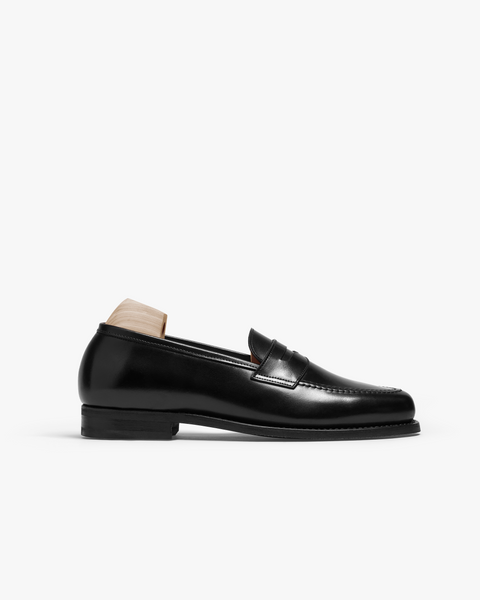
Odour isn't really about the shoe; it's about moisture. Sweat feeds the bacteria that cause the smell, so the job is managing damp, not masking it. Three habits cover almost all of it. Rotate. Never put the same pair on two days in a row; give each a full day or more to dry out. Tree them the moment they come off — a pair of cedar shoe trees draws moisture out of the lining, neutralises odour and holds the shape while the leather dries. And if you sweat heavily, a dusting of foot powder before a sockless day helps.
The reason to be disciplined is that smell is the problem you can't fix later. Caught early, a cedar tree and a thorough dry-out will rescue a shoe; once sweat has fully saturated the lining, the smell tends to be permanent. The same drying habits make the shoes last, too — two pairs worn in turn last more than twice as long as one pair worn into the ground. Lightly lined summer pairs, softer inside, get the most from all of this; the tree holds their shape as well as drying them.
Anything beyond the routine (a rain mark, a tide line, salt that's already set) is in our guide to caring for suede shoes, and the leather-care guide does the same for smooth calf. If the question is which loafer to wear in the first place, that's the main guide: how to wear loafers.
For bare-ankle weather
View all


A few more questions
Do no-show socks slip down inside loafers?
A cheap pair will; a well-cut one with a silicone heel grip stays put through the day. Sizing matters too — a liner that's slightly too big is the one that rides down.
Will going sockless ruin my loafers?
Not if you keep them dry. The damage from sockless wear is cumulative moisture in the lining, so keep two pairs on the go and dry each with a cedar tree in between. A liner adds another layer of protection without changing the look.
Can you fix loafers that already smell?
Sometimes. A cedar tree, a thorough dry-out and an interior deep-clean will rescue a shoe caught early. Once the lining is fully saturated the smell can be permanent — that's why the routine is prevention rather than cure.


