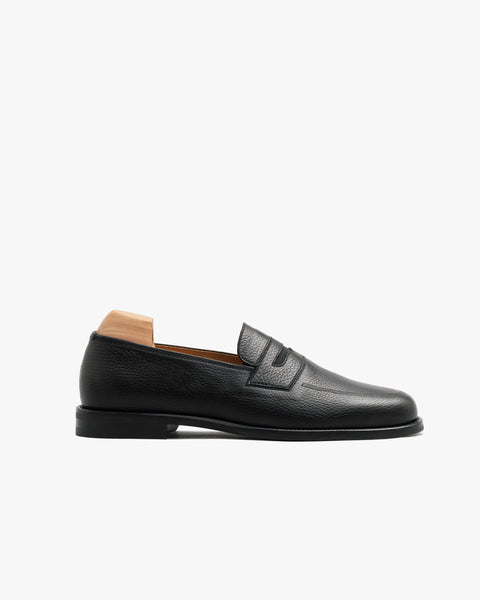
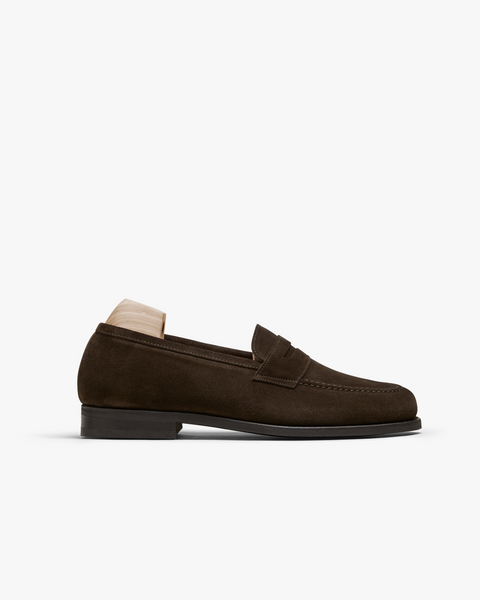
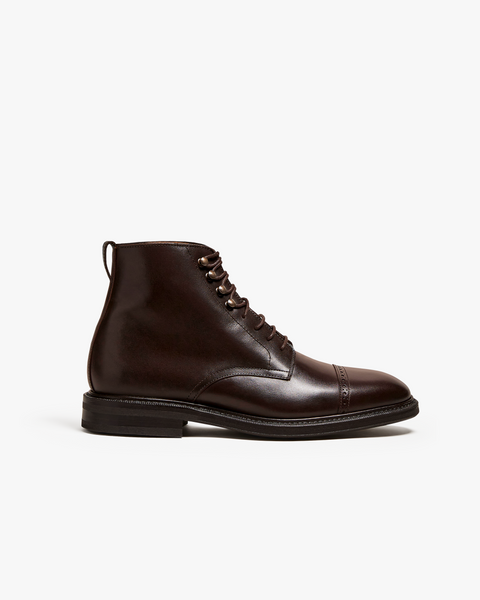
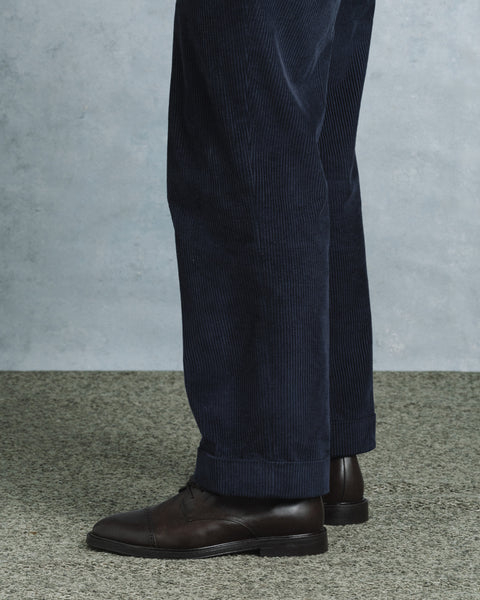
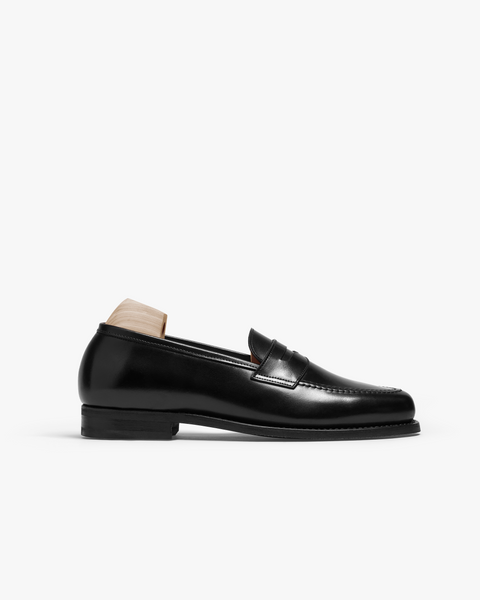
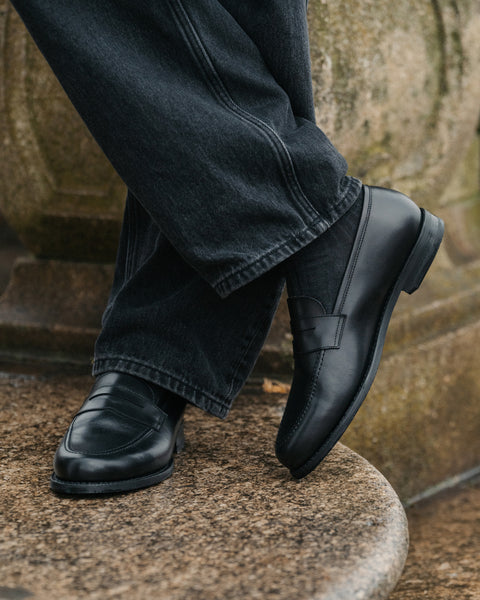
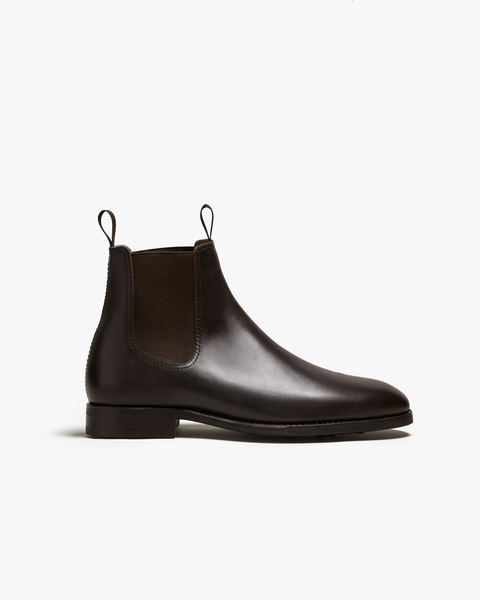
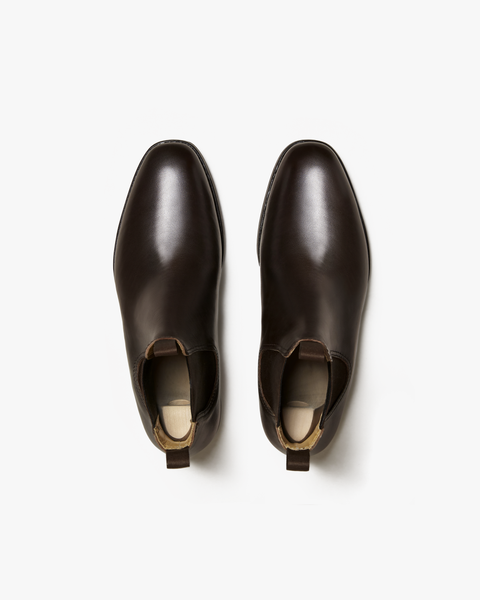
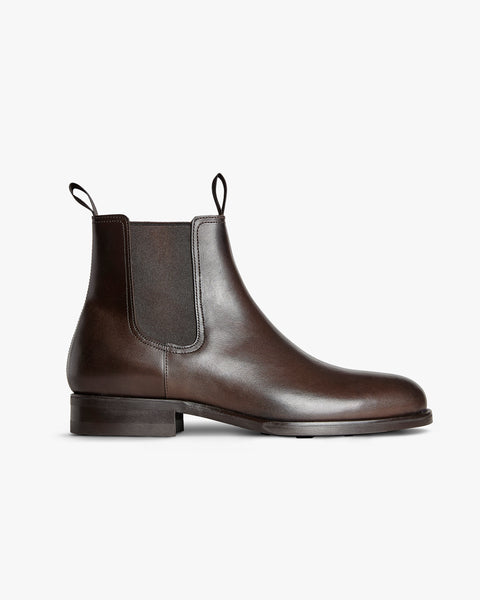
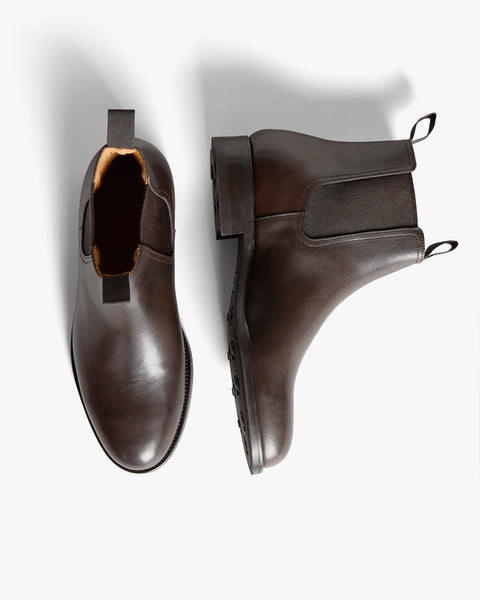


A dress shoe is two builds stitched together: an upper (vamp, quarters, toe cap, facing, tongue, throat, topline and lining) and a sole assembly (insole, cork filling, welt, outsole, shank and heel). Two parts matter more than the rest: a closed or open throat is what separates an oxford from a derby, and a stitched welt is what lets a shoe be resoled instead of replaced.
You can wear dress shoes for years without knowing what any of their parts are called — most people do. The names only start to matter when you have a decision to make: comparing two pairs, reading a product page, or asking a cobbler whether a pair is worth repairing.
The names all belong to one of two builds: the upper, which is everything above the sole, and the sole assembly underneath it. Nearly everything you can see is the upper; nearly everything that wears out is the sole.
The upper
The upper breaks into a handful of panels, and they're easiest to learn front to back. The vamp covers your toes and the top of your foot. The toe cap, where the shoe has one, sits across the very front. The quarters are the two panels that wrap the sides and meet at the back of the heel.
The lacing has names of its own. The facing (some makers say eyestay) is the pair of flaps that carry the eyelets, the tongue sits beneath them, and the throat is the point where the vamp meets the lacing. Round the back, a stiff heel counter holds the shape of the heel, the topline (or collar) is the padded rim your ankle rests against, and a smooth lining finishes the inside.
You won't need most of these often. The throat is the exception: closed lacing makes the shoe an oxford, open lacing makes it a derby. If you only remember one name from this half of the shoe, make it that one.
Underfoot
Turn the shoe over and the sole looks like one solid piece. It isn't. Underfoot, the shoe is a stack of layers, named from the inside out: insole, cork filling (or midsole), welt, outsole (the layer that meets the ground), shank and heel. Two more names mark places rather than layers: the feather is the edge where the upper meets the sole, and the waist is the narrow section under the arch.
The insole is the layer your foot rests on. On a welted shoe, a bed of cork sits just below it and moulds to the shape of your foot the more you wear the pair. The shank, a strip of steel or wood, bridges the waist to support the arch and keep the shoe from folding.
The welt is the second name worth remembering. It's a narrow strip of leather stitched round the edge of the shoe, and its job is to join the upper to the outsole. Because the outsole is sewn to the welt rather than glued straight onto the shoe, a welted pair can be resoled and rebuilt for years. A glued pair can't; once the outsole wears out, you replace the shoe rather than the sole.
Every dress shoe is built from these same parts. The styles differ in how the parts are cut and fastened: a closed throat or an open one, a strap instead of laces, or no fastening at all. To put names to those styles and work out which pair to buy first, read our guide to the types of dress shoes.


